Israel's Master Plan Approval Process Averages Eight Years Amid Reform Calls
A comprehensive master plan in Israel takes an average of eight years to approve, hampering urban development and housing growth. The Planning Administration aims to cut this timeframe to three years.
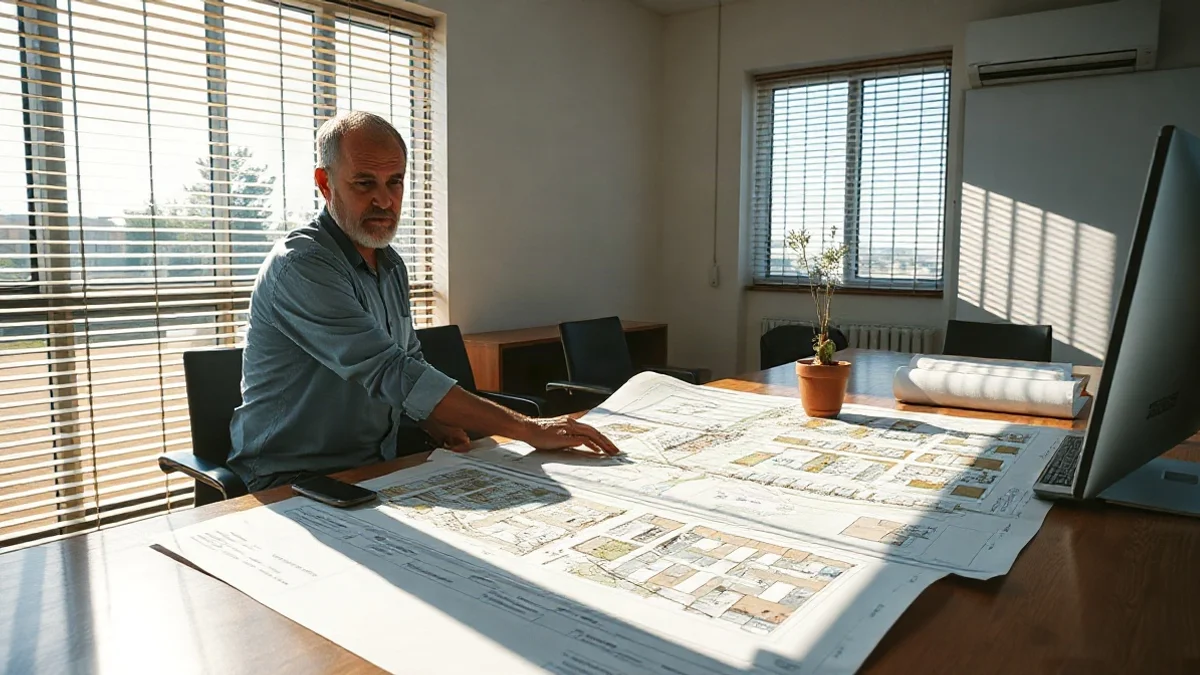
It takes an average of eight years to approve a comprehensive master plan in Israel, according to recent data from the Planning Administration. This average conceals wide disparities, with some plans approved within four to five years, while others drag on for up to 15 years. In response, the Planning Administration has set an ambitious target: to slash the duration of approving a comprehensive plan to approximately three years.
The duration is particularly significant because a comprehensive master plan is meant to define a city's development framework for years or even decades ahead: where residential, commercial, and employment areas will be established, what housing density will be permitted in various zones, what the construction character will be, and how transportation and other infrastructure will look.
Bureaucracy and Delays in Major Cities
The lengthy procedures can be seen in several major cities across the country. In Tel Aviv, plan TA/5500 has been promoted since early 2021, aiming to add about 57,000 housing units and approximately 800,000 square meters of employment space by 2035, primarily through urban renewal and densification around mass transit systems—the three light rail lines and the metro. The plan was deposited in January 2026, and 526 objections were filed, including one by the municipality itself.
In Petah Tikva, plan PT/2040 presents a potential of about 63,500 apartments and roughly 3.8 million square meters of employment and commerce, aiming to enable the city to reach up to 460,000 residents. The plan was approved by the local committee in December 2021 and discussed by the district committee about a year later, but has yet to advance further.
In Ramat Gan, plan RG/1 includes more than 83,000 new apartments, a target of around 400,000 residents, and about 4.75 million square meters of employment and commerce by 2050. The plan was deposited for objections in February 2025, with more than 60 objections submitted. In Herzliya, the master plan Herz/2530 was designed to allow an addition of over 50,000 apartments, but following public struggles, the number was scaled down, and the plan deposited in 2017 was ultimately withdrawn by the municipality.
Seeking Flexibility and Reform
"When a plan you've been working on for a decade reaches the finish line, it is probably no longer relevant," says Adv. Beni Arbiv, who recently took office as chairman of the National Planning and Building Council.
According to Arbiv, one of the central reasons for the prolonged procedures is the excessive level of detail in existing plans. He advocates for leaner, more focused, and flexible comprehensive plans that leave room for maneuver, alongside examining the possibility of updating plans more frequently, currently set at a five-year cycle.
Kobi Arditi, CEO of RMA from the Ram-Mograbi-Arditi Group, notes: "Every year that passes until deposition, approval, and detailed planning is a year where a large part of Israel's development potential remains only on paper. The system simply does not work—tons of bureaucracy, time, and public resources that do not yield results."