Israelis Shift More Funds to Long-Term Bank Deposits Amid Rate Cuts
Israeli households increased long-term fixed deposit placements by 29% in October to 1.21 billion shekels, seeking to lock in yields amid expected interest rate cuts.
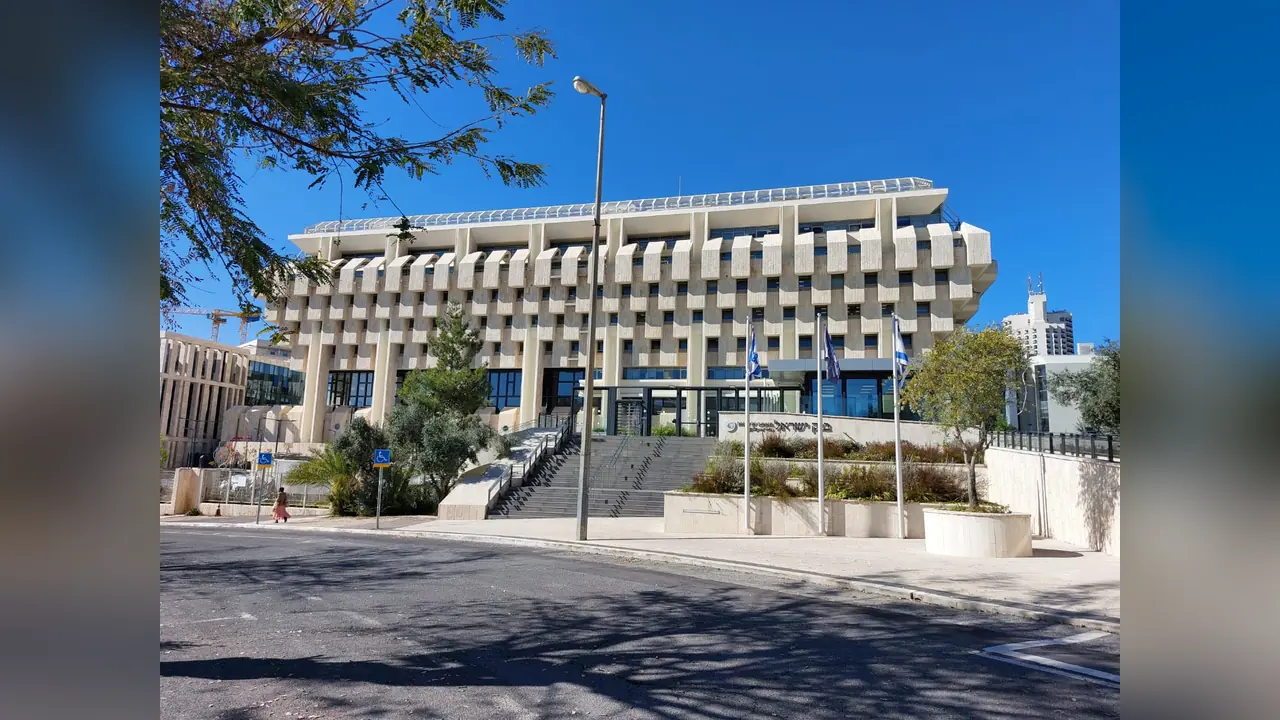
Israeli households increased their allocations to long-term fixed-rate bank deposits in October, seeking to lock in yields amid expectations of further monetary easing, according to data released by the Bank of Israel on Wednesday.
Households deposited 1.21 billion shekels in fixed-rate deposits for periods of three to five years in October, marking a 29% increase compared to September. The share of these long-term deposits out of total new household deposits rose to 3.7%, compared to 2.8% in the previous month and less than 1% in October of last year. This marks the second consecutive month of sharp growth: in August, 481 million shekels were deposited into such accounts, representing a 2.5-fold surge over a two-month period. Compared to October of last year, when 276 million shekels were deposited, this is a 338% spike.
This growth occurred despite the average interest rate on long-term deposits remaining relatively stable, standing at 3.05% in October, compared to 3.01% in September and 3.12% in August. Furthermore, the interest rate on long-term deposits is lower than that offered on shorter-term options. In October, the average interest rate on fixed-rate deposits ranging from six months to one year stood at 3.55%, and on deposits from one to two years at 3.24%. One of the primary motivations behind the interest in long-term deposits is the desire to secure a fixed return over an extended period. The benchmark interest rate currently stands at 3.25% following a series of cuts that began in November of last year, and the Bank of Israel expects further reductions in the coming year that will bring the rate down to 3%.
In contrast, deposits with a fixed term of one to two years saw a 10.2% decline in October compared to September, totaling 3.16 billion shekels, while deposits ranging from six months to one year dropped by 1.9% to 8.44 billion shekels. Total new household deposits in October reached 32.7 billion shekels, remaining virtually unchanged from September. Despite the surge in long-term savings, a significant portion of funds remains concentrated in much shorter horizons. In October, 14 billion shekels were deposited in terms of up to one month, including daily and weekly deposits, accounting for 43% of all new deposits.