Israel's Judicial System Faces Deep Crisis as Criminal Trials Span Decades
Israel's judicial system faces severe backlogs as criminal proceedings routinely span nearly a decade, from lengthy pre-trial investigations to protracted court trials.
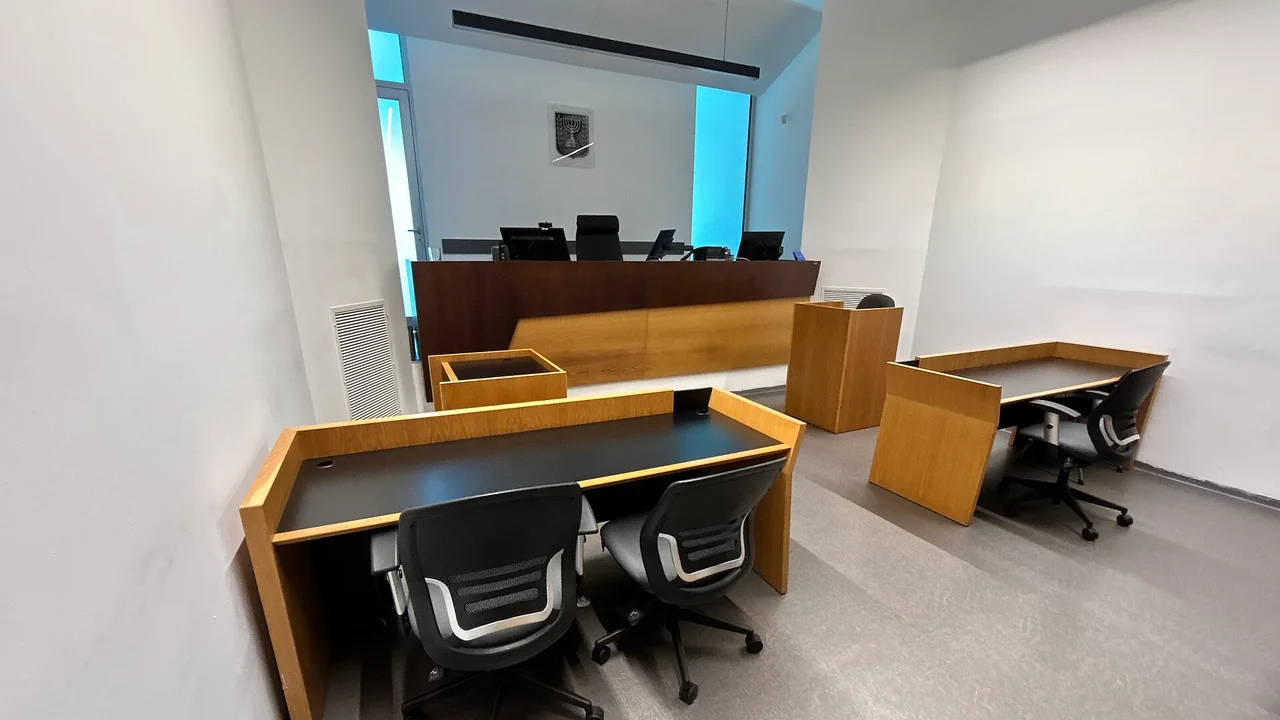
The Israeli judicial system faces mounting criticism as criminal proceedings frequently stretch across nearly a decade, severely impacting public officials, private citizens, and institutional credibility. The Haifa District Court recently concluded a nearly nine-year legal saga involving former Hadera Mayor Tzvika Gandelman, imposing a minor community service sentence without a criminal conviction. Initiated in mid-2018, the proceedings underscored the profound personal and professional toll of protracted litigation.
Pre-Trial Delays and State Prosecution Backlogs
The systemic bottlenecks often originate long before a case reaches a courtroom, embedded deep within the investigative and prosecutorial stages. The State Attorney's Office economic division recently notified defense counsel for Petah Tikva Mayor Rami Greenberg and other suspects that the State Attorney is weighing indictments against them. Greenberg was first interrogated in July 2022, yet a pre-indictment hearing was scheduled only four years later, with a definitive decision expected to take another year. This trajectory ensures that over half a decade will pass without a formal charge sheet being filed, setting the stage for a trial that could easily push the total legal process past a decade.
Similar delays affect high-profile public corruption cases and high-stakes investigations. Shlomo Filber, a key state witness in the Prime Minister's trials who recanted aspects of his testimony, concluded his testimony in mid-2022, yet a pre-indictment hearing was held only recently—nearly five years later—with no final charging decision issued. In the case involving advisor Yonatan Urich, the prosecution pushed defense attorneys to attend a hearing in October 2025 while refusing brief adjournments, leading to an indictment decision seven months later in a case where the trial has yet to begin.
According to the State Attorney's Office data, while statutory guidelines are met in most standard matters, compliance rates decline annually in pending investigation files known as pending preliminary review cases. By 2024, approximately 30 percent of such cases exceeded established guideline timeframes. These backlogs predominantly affect complex public corruption investigations, generating severe ripple effects for governance and democratic stability.
Protracted Court Trials and Management Challenges
Once indictments are formally filed, judicial proceedings routinely extend for years. High-profile defendants face multi-year limbo, including MK David Bitan, who was interrogated in 2017, indicted in 2021, and still awaits a verdict. Similarly, the submarine procurement affair saw indictments filed in 2021 with no resolution in sight nearly six years later, while the legal proceedings surrounding Gal Hirsch have dragged on for over a decade from the initial investigation through ongoing trial phases. Even straightforward matters, such as the assault case involving MK Ofer Cassif, required four years from the initial 2022 incident to a 2026 conviction.
Judicial leadership and administrative structures face sharp scrutiny regarding their handling of systemic efficiency. Critics point out that court presidents and system administrators often lack specialized management training, relying instead on incremental technological tools and budget requests rather than structural reform. Furthermore, the principle of judicial independence prevents court administrators from directly directing or overseeing judges, limiting managerial leverage over docket efficiency.
Judicial Debate and Future Outlook
Recent legal forums have highlighted deep divisions among jurists regarding the root causes of systemic delays. During a panel hosted by the Israeli Forum for Law and Liberty, former district judges offered sharply contrasting viewpoints. Former Judge Ron Shapira argued that existing measures act merely as superficial remedies, calling for alternative dispute resolution mechanisms to divert cases outside traditional courts. Conversely, former Judge Menachem Raniel maintained that the crisis stems from poor courtroom management rather than sheer volume, criticizing inconsistent cost-of-litigation orders and inefficient docket control. Former Judge Moshe Drori rejected the premise of an efficiency crisis entirely, asserting that a judge's primary duty is attentive listening and dispensing substantive justice.
Similar ideological divides persist within the Supreme Court. Supreme Court President Isaac Amit cautioned against an excessive shift from evidentiary focus to excessive procedural rights, pointing to defense motions and investigative oversights as drivers of delay. In contrast, Justices Daphna Barak-Erez and former Justice Yosef Elron emphasized that protecting fundamental procedural rights remains a cornerstone of fair trials. As former Supreme Court Justice Yoram Danziger famously noted, delayed justice is denied justice, leaving incoming government leadership with an urgent mandate to dismantle systemic trial delays across Israel.