Israel Welcomes 18,696 New Immigrants in Past Year Despite Ongoing War
A total of 18,696 new immigrants arrived in Israel during the past Hebrew year despite the ongoing war. Russia and France led the source countries, with Tel Aviv and Netanya absorbing the most newcomers.
Aliyah to Israel has always been a complex decision, balancing security concerns with leaving a comfortable life abroad. However, the data for the Hebrew year of Tashpav (2025-2026) proves that the positive trend persists, with 18,696 new immigrants choosing Israel as their home.
The newcomers include two 102-year-old immigrants from Russia and France, and a two-week-old baby from Mexico. For Israel, this influx represents vital reinforcement for the healthcare system, academic campuses, high-tech growth engines, and the IDF.
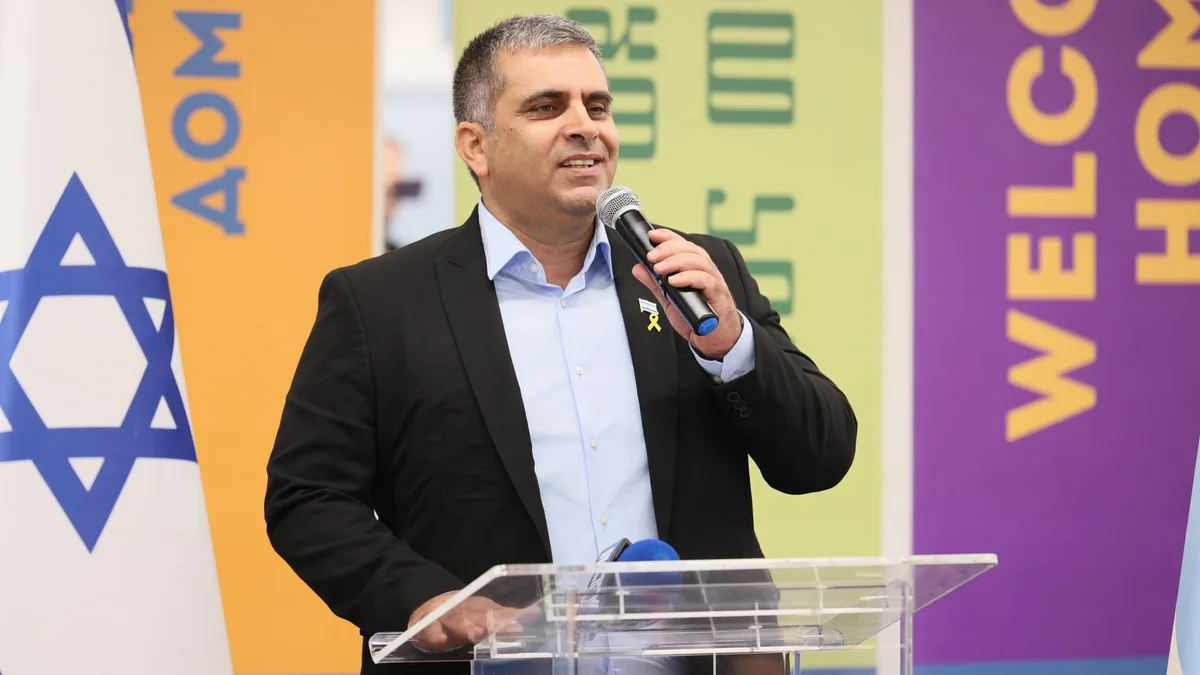
Dganit Senker-Lange, Director General of the Ministry of Aliyah and Integration, stated:
"Maintaining such high numbers of people leaving comfortable lives is an immense achievement. This past year, we saw a significant spike in the opening of aliyah files. For many Jews worldwide, this acts as an insurance policy. They know they are on their way, even if it takes a year or two."
Demographics and Geographic Trends
The largest age group among the new immigrants is young adults aged 18 to 35, totaling 6,394 people. In the prime working age of 36 to 50, there were 3,348 immigrants, while the 51 to 60 age bracket registered 1,732 newcomers.
Significantly, immigration did not halt even during wartime. "Aliyah did not stop for a single day after the October 7 disaster," Senker-Lange noted, emphasizing that those who had already sold their homes and pulled their children out of schools proceeded with their plans.
Russia leads the list of source countries with 5,572 immigrants, followed by France with 4,148—a surge directly influenced by rising antisemitism in Europe. The United States saw 2,951 immigrants, the UK 904, Ukraine 791, and Belarus 475.
In terms of municipal absorption, Tel Aviv-Yafo leads with 2,651 new residents, followed closely by Netanya with 2,224. Jerusalem absorbed 1,988 immigrants, Haifa 1,451, Bat Yam 933, Ra'anana 917, and Ashdod 814.
Easing the Integration Process
Minister of Aliyah and Integration Ofir Sofer has championed a strategy focusing on Western countries and young immigrants. Amid rising antisemitism on US campuses, Israel has invested in academic programs taught in English, French, and Russian during the first year, coupled with free tuition.
Education data justifies this investment: 6,144 immigrants hold higher or post-secondary degrees, while 4,176 possess defined vocational training.
Addressing the chronic shortage of medical personnel, 414 doctors immigrated this year. To bypass bureaucratic hurdles, the Ministry, in collaboration with the Ministry of Health, established the Physicians Administration. Representatives meet candidates abroad, enabling doctors to start working within a week of arrival. A similar pre-aliyah placement model has been launched for English teachers in cooperation with Nefesh B'Nefesh.
Contribution to Defense and Economy
This year, 2,550 new immigrants enlisted in the IDF, including 1,360 lone soldiers. Senker-Lange, who served 24 years in the IDF Personnel Directorate, emphasized the comprehensive support envelope provided to these soldiers.
Economically, the Director General views aliyah as a national growth engine:
"Studies show that any investment in an immigrant triples itself within ten years. Aliyah is Israel's ultimate HR department in fields ranging from artificial intelligence to specialized railway engineering."