Israel Expands Agrivoltaic Solar Projects to Protect Agriculture and Boost Energy
Maaleh Gilboa and agricultural leaders are expanding agrivoltaic projects across Israel to secure farming revenues, navigating high setup costs, regulatory oversight, and grid bottlenecks.
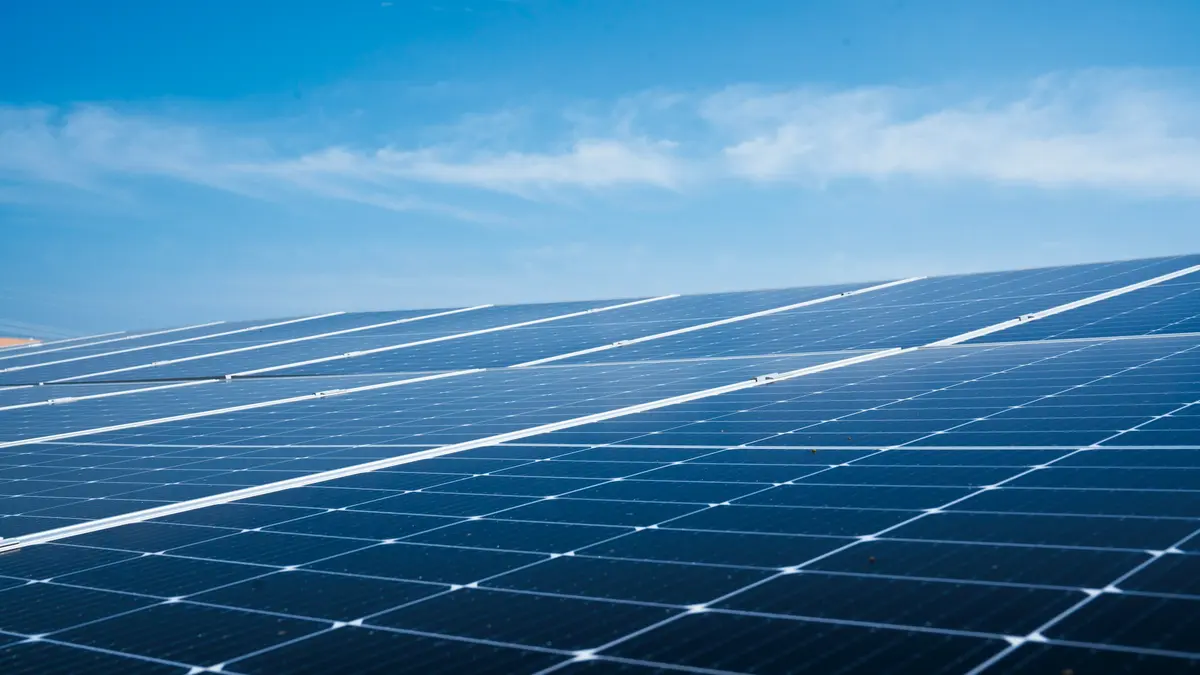
Agriculture and renewable energy have long operated in separate spheres, but shifting economic realities and the scarcity of land in Israel have forced a new synergy. For the agricultural community of Maaleh Gilboa, entering the electricity production sector was never intended to replace farming, but rather to ensure its survival. Over the past twelve years, the collective has invested roughly 30 million shekels across various agricultural branches out of ideological commitment. However, agricultural investments carry substantial financial risks, prompting the community to seek a stable secondary revenue stream to underwrite its primary operations.
Pioneering Agrivoltaics in Israel
Finding its answer in the energy sector, the community evolved over a decade into a multifaceted energy producer operating solar photovoltaic installations, wind turbines, pumped-storage hydroelectric facilities, and biogas plants. Dubi Miller, chairman of the community management and head of its energy operations, identified the potential of combining agriculture with solar installations as early as 2017, positioning the community among local pioneers. Facing early skepticism and resistance from government bodies, including the Ministry of Agriculture, the leadership persisted. Today, floating solar installations cover the community fish ponds to generate five megawatts, with expansion plans already underway.
The regulatory landscape has also evolved to support these dual-use initiatives. In August 2023, the National Outline Plan for agrivoltaic research and development facilities was approved, establishing permitted uses, building rights, and criteria for experimental permits. This was followed in February 2026 by final approval for a comprehensive plan regulating commercial facilities combining solar energy production with ongoing agricultural cultivation, complete with distinct licensing tracks separated from standard ground-mounted solar farms. According to the Planning Administration, 107 agrivoltaic plans are advancing through various stages: 38 plans encompassing approximately 12,000 dunams have already been approved, 17 plans covering about 4,600 dunams have passed deposit stages, and 52 plans spanning roughly 19,000 dunams are awaiting deposit.
Securing the Future of Farming
Agricultural cooperatives and moshavim, which hold the majority of agricultural land in Israel, represent the primary target audience for these projects, predominantly concentrated in regional councils across the periphery in The North and The South. Amit Yifrach, secretary-general of the Moshavim Movement, views the shift toward agrivoltaics as a game-changer that provides financial predictability to a notoriously uncertain sector. Yet, high capital expenditure remains a hurdle for individual farmers, with projects primarily driven by agricultural societies partnering with external energy firms. Furthermore, experts warn that failure to maintain active agricultural cultivation could render agrivoltaic sites more damaging than traditional solar farms due to the wider spacings required for heavy farm machinery.
To mitigate this risk, the state has anchored strict enforcement mechanisms into its regulations, mandating regular reporting to the Ministry of Agriculture and imposing heavy penalties or revocation of proceeds for neglecting crop cultivation. Doral Group, a leading energy firm that partnered with Maaleh Gilboa to establish Israel's first agrivoltaic system, emphasizes that crop production is actively integrated through agronomists and shared management. Having launched its first agrivoltaic project in 2023, Doral has initiated six additional projects this year, with plans to double that figure next year. To foster innovation, Maaleh Gilboa also operates a specialized research facility spanning 150 dunams, testing six different solar panel technologies alongside diverse crops including mangoes, lychees, vineyards, and field crops with funding from the Jewish National Fund and academic institutions.
Economic Viability and Grid Bottlenecks
Constructing agrivoltaic systems remains capital-intensive, with costs ranging from 4,000 to 4,500 shekels per kilowatt before storage components, and an additional 2,000 shekels per kilowatt for battery storage systems. A 10-megawatt project with storage is estimated at roughly 65 million shekels. Despite these high setup costs, industry experts note that agrivoltaic installations remain significantly cheaper and faster to deploy than conventional power plants. Energy companies and agricultural landowners primarily deploy two business models: a 25-year land lease model yielding around 10,000 shekels per dunam annually, or a full partnership model where landowners share directly in project returns.
Despite widespread planning enthusiasm, the expansion faces a critical infrastructure bottleneck: Israel's electrical transmission grid. Prepared by Noga, the independent system operator, recent utility reports indicate that high-yield renewable energy concentrations in the Western Negev, the Golan Heights, the Beit Shean Valley, the Jezreel Valley, Arad, and the Arava risk overwhelming existing transmission capacities. Transporting surplus energy to major demand centers in the central region requires massive grid reinforcement, including second transmission lines from the Tsofit and Haruvit switching stations up to Kesem. To bypass these transmission delays, energy developers are actively exploring localized solutions, such as pairing large-scale renewable generation sites with heavy power consumers like data centers, which are projected to account for up to 20% of Israel's national electricity consumption by 2030.