Exit ban for combat soldiers and troop redeployment: IDF prepares for escalation
The IDF is preparing for a possible escalation in Judea and Samaria around the holidays and elections, alongside the burden on several "bubbling" fronts simultaneously - Gaza, Lebanon, and Syria. The Head of the Operations Directorate, Major General Itzik Cohen, will be required to decide in the coming days on the distribution of forces between the sectors, as the security establishment is also considering restricting leave for combat soldiers.
The Head of the Operations Directorate in the General Staff, Major General Itzik Cohen, will be required in the coming days to decide whether to shift regular and reserve forces from Lebanon, Syria, and the Gaza Strip to the Central Command. This comes against the backdrop of fears of an escalation in Judea and Samaria ahead of the holiday period and in the shadow of the election campaign. As part of the situation assessment, the IDF is also considering an exit ban for combat soldiers.
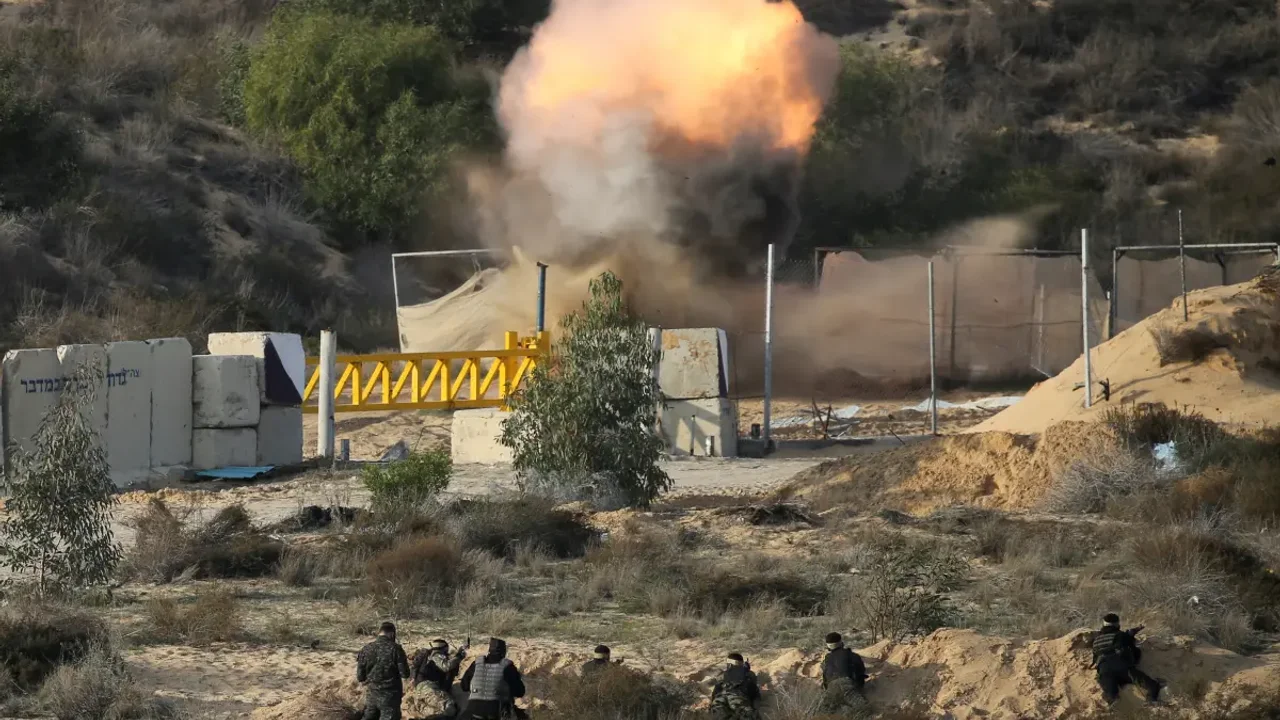
The security establishment is currently dealing with several bubbling fronts simultaneously. In the Gaza Strip, Hamas continues to challenge IDF forces along the "Yellow Line," deep within Palestinian territory, and also in the maritime space, where Navy fighters are deployed in a reinforced array for any scenario.
Meanwhile, the Commander of the Southern Command, Major General Yaniv Asor, is leading, together with the Shin Bet and Aman, a return to a clear policy of targeted killings. In the last two weeks, about 19 terrorists have been eliminated, including a company commander in Hamas's military wing.
Cohen, who is now required to make the sensitive decision, having entered his position in July 2025 after commanding the 162nd Division throughout the longest period of fighting among all division commanders in the war, is now required to make one of the most sensitive decisions of the Operations Directorate: the distribution of forces between several active fronts simultaneously.
Since taking office, Cohen has led processes of situation assessment and deployment of regular and reserve forces, against the backdrop of criticism regarding the burden and attrition in the IDF. The decision-making process he managed helped him gain the trust of the Chief of Staff, Lieutenant General Eyal Zamir, and he has become a permanent figure in critical discussions in the General Staff, before the Minister of Defense and the Prime Minister.
Alongside the threats in the maritime arena and the third circle - Iran, Iraq, and Yemen - which require the Air Force to prepare for a rapid transition between defense and offense, the Central Command sector has been attracting increasing attention in recent weeks. In Judea and Samaria, any unusual event could ignite the region: nationalist crime, Jewish terrorism, Palestinian terrorism, or daily friction between populations that could quickly slide into violence.
The fear is sharpened ahead of the holiday period, which is characterized by trips, mass events, and political events in the background of the elections. The IDF also takes into account the possible influence of the election campaign on the mood on the "red side" - the enemy territory - and also on the "blue side," within the State of Israel.
Therefore, subject to the situation assessment, the Head of the Operations Directorate will be required to decide whether to shift forces from Syria, Lebanon, or the Gaza Strip to the Central Command, in order to prevent escalation or provide a quick response to unfolding events. In this context, the IDF mentions what happened this week in the Jordan Valley: two attacks within a few hours, in one of which an Israeli citizen was stabbed by a terrorist who fled and was arrested, and in the second, a terrorist who tried to stab a soldier and was eliminated. The decision on personnel issues is expected to be made in the coming days, while examining the possibility of imposing an exit ban on combat soldiers.
In Southern Lebanon, the IDF continues to thicken security components on the "Yellow Line," scan vast areas of terrain, and locate terrorists, terrorist infrastructure, and weapons above and below ground. At the same time, friction continues with Hezbollah terrorist cells, which challenge the forces also using explosive drones. Reserve officers in the Northern Command told Walla that the Lebanese army is not meeting its commitment to locate Hezbollah's terrorist infrastructure and destroy it.
Also in Syria, the IDF continues to hold significant areas of terrain, which serve as a security belt for the Golan Heights settlements. The activity includes operations in Syrian villages against terrorists, collaborators, and arms dealers. The IDF is debating how to handle several pre-known friction points, including Mazraat Jan, in whose area at least one operation has already taken place that failed.
The pressure from the Syrian regime, the United States, and now also Turkey challenges the political echelon and the General Staff, but the IDF emphasizes that the security importance of continuing to maintain the security belt is clear - and it requires leaving forces from the Hermon to the border triangle with Jordan.