Human Zoos: The Dark History of Exhibiting People in Cages for Entertainment
Until the mid-20th century, human zoos in Europe and America displayed tens of thousands of indigenous people in cages for entertainment, cementing colonial propaganda.
Until less than seventy years ago, human beings were publicly displayed across Europe and the United States in sensationalized exhibitions known as human zoos. Millions of visitors paid admission fees to observe indigenous peoples, Africans, and Asians living behind fences, inside specially constructed native huts, and occasionally inside animal cages. This widespread phenomenon flourished from the late 19th century through the mid-20th century, serving as a pillar of colonial justification and racial hierarchy in Western nations.
Mass Entertainment and Political Propaganda
What appears unimaginable today functioned as a thriving entertainment industry. Families flocked to exhibition grounds where organizers promised a rare glimpse into the daily lives of distant populations. Featured individuals were frequently required to wear traditional clothing, perform ritual dances, prepare food, and execute routine chores before curious crowds who examined them as exotic novelties. According to data published by the Royal Museum for Central Africa in Belgium, approximately 35,000 individuals were exhibited globally over the decades, attracting a staggering cumulative total of more than 1.5 billion visits.
The phenomenon spanned multiple countries including France, Belgium, Germany, and the USA, frequently organized under the patronage of governments, scientific institutions, and international expositions celebrating human progress. During the 1889 Paris Exposition celebrating the centennial of the French Revolution alongside the inauguration of the Eiffel Tower, organizers established a mock African village featuring 400 individuals. Approximately 28 million people visited the exposition, with millions inspecting the human exhibits set up near animal displays to reinforce the colonial narrative of bringing civilization to perceived primitive cultures.
The Belgian Atrocity in Tervuren
One of the most heavily documented horrors occurred in Belgium in 1897, when King Leopold II initiated a colonial exhibition in Tervuren near Brussels. Organizers imported 267 Congolese men, women, and children, housing them in mock straw-hut villages for public viewing. The exhibition drew up to 40,000 visitors on peak days. According to the French National Centre for Scientific Research, one enclosure featured a sign instructing visitors: "Do not feed the Congolese. They have already been given food." This signage illustrated how completely organizers blurred the line between human beings and zoo animals.
The harsh conditions and European climate proved fatal for several participants. Seven Congolese individuals died during their stay in Belgium, their stories erased from historical memory for decades. Today, the Royal Museum for Central Africa in Tervuren addresses this dark chapter through dedicated historical retrospectives.
The Tragic Ordeal of Ota Benga
Perhaps the most harrowing individual account is that of Ota Benga, a young Congolese man exhibited in 1906 at the Bronx Zoo in New York. Having arrived in the United States two years earlier following his participation in the St. Louis World's Fair, Benga was transferred to the Bronx Zoo after a brief stint at the American Museum of Natural History. After initially roaming the grounds to assist animal keepers, zoo officials decided to place him inside the monkey house. They hung his hammock in a cage, equipped him with a bow and arrow, and invited visitors to watch him as a primary zoo attraction.
Public outcry from clergymen and prominent members of the Black community eventually forced authorities to remove Benga from the primate enclosure, yet he remained hounded by relentless crowds across the zoo grounds. Benga later relocated to Virginia in an attempt to rebuild his life, but the trauma proved insurmountable. On March 22, 1916, in his mid-thirties, he ended his life by gunshot. His life remains one of the most powerful indictments of the exploitation inflicted in the name of entertainment and racial pseudoscience.
The Lingering Legacy and Final Exhibitions
Although the practice declined following the Second World War as the horrors of Nazi ideology and rising anti-colonial movements shifted global consciousness, human exhibitions persisted remarkably late. In 1958, an international exposition in Brussels featured a reconstructed Congolese village where human beings were once again displayed to visitors, sparking widespread protests and marking one of the final instances of the tradition.
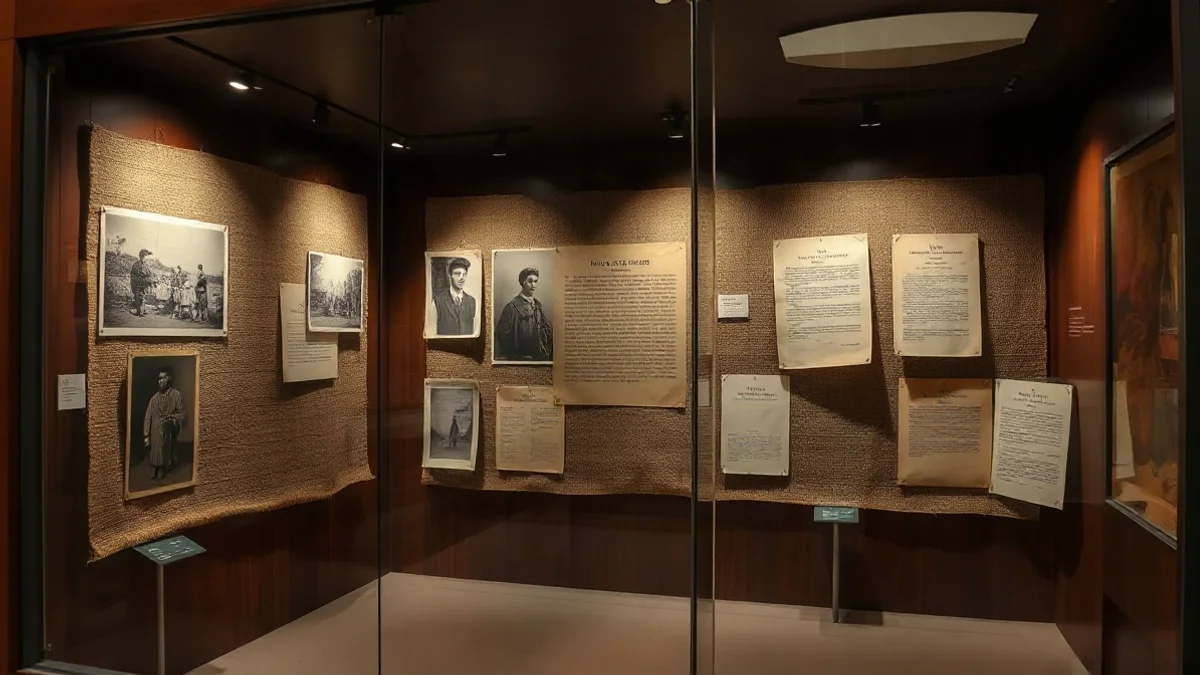
Decades later, European museums and historians began confronting this painful heritage openly. In 2021, the Royal Museum for Central Africa inaugurated a special exhibition titled "Human Zoo: The Age of Colonial Exhibitions," displaying over 500 historical documents and artifacts. The initiative sought to restore dignity and historical voice to the tens of thousands of victims who spent their lives exhibited before millions without agency or recourse.