Houthi Missile Strikes Riyadh Skyscraper as Rare Anti-Regime Protests Erupt in Iran
A Houthi missile strike damages the tallest skyscraper in Riyadh, housing Saudi Arabia's sovereign wealth fund. Concurrently, rare anti-regime protests erupt in western Iran following a fatal oil refinery workers' crash.
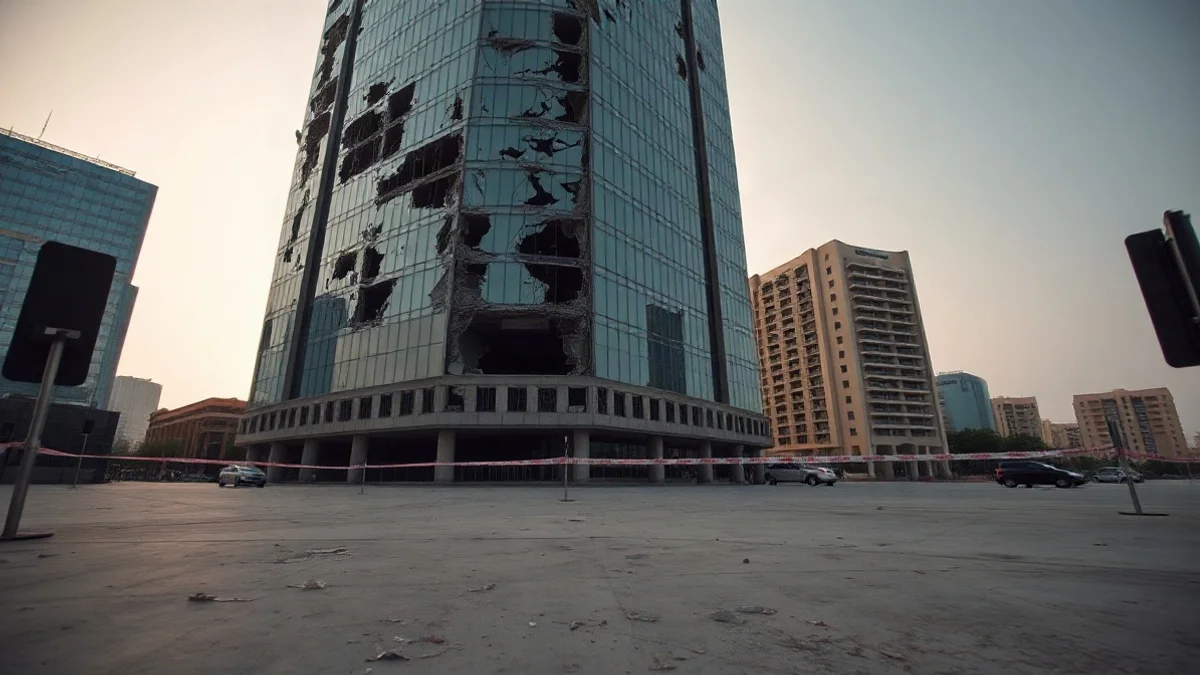
Houthi Missile Strikes Riyadh Skyscraper
An escalating regional conflict unfolded as a missile launched by the Houthis struck the tallest skyscraper in Saudi Arabia's capital, Riyadh, housing the offices of the kingdom's sovereign wealth fund. The impact caused significant structural damage to the Public Investment Fund (PIF) tower located in the King Abdullah Financial District, shattering windows across seven to eight floors and damaging parts of the metal facade. Early morning explosions prompted security forces to seal off the financial district, while employees were evacuated from surrounding buildings. Ambulances and fire crews rushed to the scene, though no casualties were immediately reported.
General Turki al-Maliki, spokesperson for the Saudi-led military coalition, stated that air defense forces engaged an incoming missile threat targeting Riyadh, noting that preliminary findings indicated falling debris caused property damage. The Houthis did not immediately claim responsibility for the tower strike. This incident marks the second time in less than two weeks that a prominent building in Riyadh's financial district has been hit in an attack attributed to the Houthis, following an 8 November strike on a facility belonging to state-owned oil giant Saudi Aramco.
Strategic and Diplomatic Implications in Riyadh
The ongoing strikes occur against the backdrop of intensifying hostilities between Saudi Arabia and the Iran-backed Houthis. With the civil war in Yemen reigniting in recent months after a period of relative calm, the Houthis have stepped up drone and missile attacks targeting Saudi airports, ports, and oil facilities. In response, the Royal Saudi Air Force has resumed airstrikes against Houthi-controlled targets in Yemen, including the capital city of Sanaa. Recent Houthi territorial gains along the Red Sea coast, encompassing the strategic Bab el-Mandeb Strait, have heightened security concerns in Riyadh.
Saudi officials assess that the military campaign could persist for roughly another half-year as authorities seek to secure strategic advantages prior to initiating negotiations with the insurgent movement. The attack on the sovereign wealth fund's headquarters carries profound symbolic and economic weight, as the fund drives Crown Prince Mohammed bin Salman's ambitious agenda to diversify the national economy away from oil dependency. The repeated targeting of Riyadh threatens foreign investment inflows and the kingdom's status as a premier regional business hub. A day prior to the latest strike, Crown Prince Mohammed bin Salman met in Riyadh with Admiral Brad Cooper, commander of United States Central Command, marking their third publicly reported meeting since the renewal of hostilities in Yemen.
Anti-Regime Protests Erupt in Western Iran
Simultaneously, domestic unrest has surfaced inside Iran as authorities face rare public demonstrations sparked by a fatal road accident. Hundreds of residents took to the streets in Abdanan, located in the western province of Ilam, following a crash that killed 13 oil refinery workers. Protesters initially demanded the resignation of company executives whom they blamed for safety failures, but the demonstrations swiftly escalated into overt anti-government protests.
Verified video footage captured crowds marching through city streets chanting slogans directed against the political leadership. The Kurdish human rights organization Hengaw reported that security forces deployed tear gas and clashed with demonstrators, resulting in at least eight arrests, including a 15-year-old minor. While local parliamentary representation disputed reports of detentions, human rights monitors emphasize that the clerical establishment continues to face deep-seated public discontent amid ongoing regional conflicts.
Intensified Crackdown and International Warnings
Independent human rights monitors and United Nations officials have raised alarms over a severe intensification of state repression within Iran over recent months. Mai Sato, the United Nations special rapporteur on human rights in Iran, stated that authorities have launched renewed waves of arrests and imposed stringent penalties, including capital punishment, against political dissidents. According to UN findings, at least 39 individuals have been executed in connection with recent anti-regime demonstrations, with several carried out publicly.
International observers warn that the ruling establishment is exploiting external geopolitical tensions to suppress domestic opposition forces and silence legal representation for detained protesters. State media broadcasts of coerced confessions and ongoing judicial crackdowns underscore the volatile domestic climate as the government navigates both foreign military pressures and internal socioeconomic grievances.