Homo Erectus Survived in Southern China Rainforests Far Later Than Believed
New scientific findings reveal that Homo erectus survived in southern China's dense tropical rainforests up to 184,000 years ago, demonstrating unexpected adaptability and mobility.
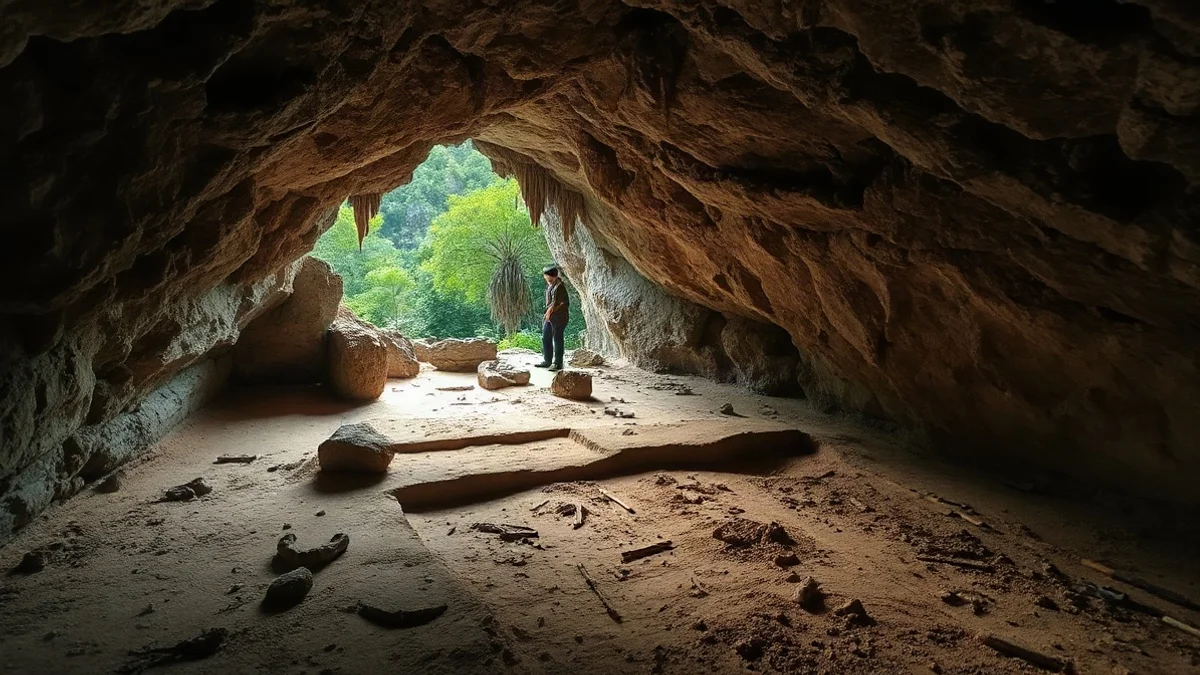
Recent scientific findings reveal that Homo erectus survived in southern China hundreds of thousands of years later than previously assumed and adapted to dense tropical rainforests. Published in the journal Nature, two landmark studies conducted by an international team of researchers from Australia, China, and Europe provide definitive evidence of Homo erectus existing in southern China between 324,000 and 184,000 years ago.
Discovery in the Karst Caves
The research centers on eight human teeth and thousands of accompanying fossils uncovered in two adjacent caves, Baxian and Naxian, located in the karst landscape of the Guangxi region in southern China. The two caves are situated about 15 kilometers apart within an area characterized by steep limestone hills, caves, and dense tropical vegetation. The teeth were definitively identified as belonging to Homo erectus based on physical characteristics and ancient genetic markers, while their age was established using five independent dating methods applied to the teeth, surrounding cave deposits, and mineral formations.
These results establish the latest dated evidence of Homo erectus ever found in mainland China, demonstrating that ancient human populations persisted in the region long after they were thought to have disappeared regionally.
"The discovery is fascinating, because it confirms the presence of Homo erectus in a place where we did not expect to find them, and at a time when we did not think they still existed."
Biological Archives and Mobility Patterns
Beyond dating, researchers analyzed the chemical composition of the teeth from both humans and animals found in the caves to reconstruct past environmental conditions and lifestyle patterns. Teeth preserve chemical traces of consumed food and water, acting as a biological archive of past environments. In this case, the chemical signatures point to a heavy reliance on a dense tropical rainforest ecosystem rather than the open grasslands or wooded savannas traditionally associated with Homo erectus.
Furthermore, strontium isotope analysis of the tooth enamel revealed surprising insights into the mobility of these ancient humans. The chemical signatures suggest that some individuals spent their childhood moving across surprisingly vast territories beyond the immediate cave surroundings, potentially reaching as far as northern Vietnam and mainland regions of Southeast Asia.
Redrawing Human Adaptation Timelines
These findings challenge long-held assumptions regarding the environmental limitations and ecological flexibility of archaic human species. While previous historical models linked the expansion of Southeast Asian rainforests to the disappearance of non-sapiens human groups, the southern China evidence proves that early human interaction with tropical forests was far more complex.
"These findings change the way we think about Homo erectus," stated Prof. Yingqi Zhang from the Institute of Vertebrate Paleontology and Paleoanthropology at the Chinese Academy of Sciences. "The first evidence of Homo erectus discovered alongside a rainforest-adapted fauna challenges all our assumptions regarding their ability to adapt to environmental changes."
Rainforest environments are exceptionally demanding, characterized by challenging terrain and scarce food resources. Researchers note that while Homo sapiens adapted to global rainforest environments between 100,000 and 13,000 years ago, this discovery provides the first direct, clear evidence of another human species thriving in such challenging habitats.