Israeli Court Acquits Truck Driver in Fatal Highway 5 Accident
A truck driver was acquitted of causing a fatal accident on Highway 5, as the court cited investigative flaws and ruled that the victim likely stumbled backward.
A truck driver accused of causing the death of David Sela in a fatal accident on Highway 5 has been acquitted by Judge Menachem Mizrahi, who ruled that the prosecution failed to prove the truck swerved onto the road shoulder. Additionally, the judge pointed to a series of investigation flaws, concluding that the driver's account—stating that the deceased unexpectedly moved backward into the travel lane—remained a reasonable possibility.
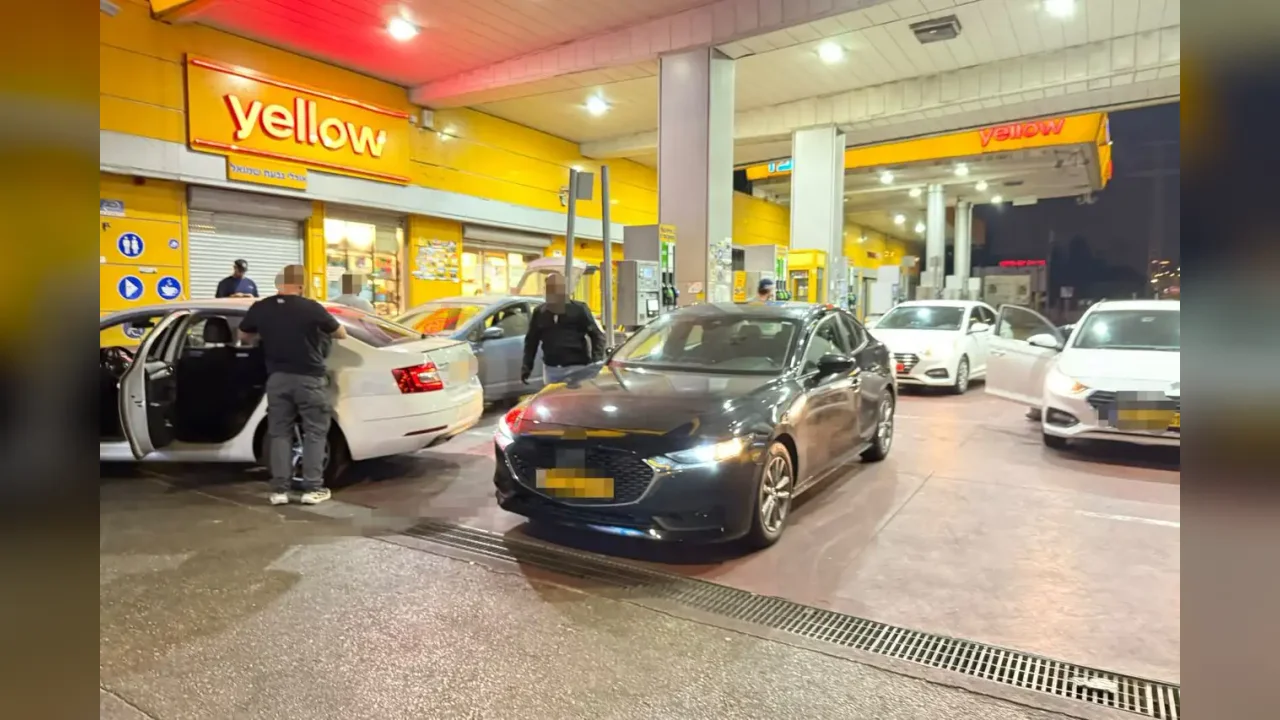
According to the indictment, the incident took place in the evening on Highway 5, near the Sha'ar Efrayim interchange. Sela's vehicle was parked on the right shoulder while he was changing a flat front-left tire. The state claimed that Ashraf Youssef, driving a heavily loaded truck from west to east at approximately 92 km/h, swerved onto the right shoulder, striking Sela and the left side of his vehicle with great force. Sela was severely injured and later pronounced dead at the hospital.
The Core Dispute and Defense Arguments
The prosecution argued that the accident resulted from Youssef's negligent driving, alleging he failed to maintain his lane, neglected to observe the vehicle despite clear visibility, drove too fast, and failed to act as a reasonable and professional truck driver.
However, the trial centered on a pivotal question: Did the truck swerve right onto the shoulder and strike Sela, or did the truck remain in its lane while Sela suddenly leaned backward into the roadway?
Youssef acknowledged driving the truck and striking Sela, but denied negligence. He maintained that he drove in the right lane, noticed the parked vehicle, and took precautions, but did not see Sela until immediately before the impact. According to his account, while loosening the wheel nuts, Sela likely lost his balance after stepping on the lug wrench and leaned backward into the truck's path.
An independent eyewitness driving behind the truck testified that he did not see the truck swerve right before the impact, but observed it swerve sharply left afterward. The witness also noted that Youssef was distraught immediately after the collision and repeatedly stated, "He jumped out in front of me into the lane." Judge Mizrahi praised the eyewitness testimony as highly reliable, objective, and supportive of the defense.
Investigation Flaws and Court Criticism
Judge Mizrahi heavily criticized the police investigation, highlighting multiple critical failures. The lead investigator arrived at the scene only the following day, after the site had been left unpreserved for hours and the truck had already been released. Consequently, determining the exact point of impact based on object locations was deemed highly problematic.
Furthermore, investigators failed to secure security camera footage from the Oranit checkpoint, did not perform an autopsy or forensic pathology review, and neglected to interview the eyewitness's son. The judge concluded that the investigative work fell far short of the standards required in criminal proceedings.
Addressing vehicle speed, the court rejected the prosecution's claim of a 70 km/h speed limit tied to roadworks, determining that the actual speed limit in the area was 100 km/h. Factoring in tachograph margins, the court established that Youssef was traveling at no more than 86 km/h.
Ruling and Acquittal
At 86 km/h, the truck covers approximately 24 meters per second. The court determined that given surrounding traffic, Youssef could not have realistically reacted to Sela's sudden backward movement in the fraction of a second available.
«I remind you that we are dealing with negligence law, and despite this sad and regrettable death, we are not dealing with strict or absolute liability laws,» wrote Judge Mizrahi.
Ultimately, the court ruled that the prosecution failed to meet its burden of proof. Judge Mizrahi acquitted Ashraf Youssef, holding that the evidence supported a realistic possibility that Sela accidentally stumbled backward into the path of the oncoming truck.