Haifa Voters Head to Polls Amid Deep Political Divides and Low Turnout Concerns
Haifa voters cast ballots amid starkly contrasting views on leadership and security, as experts analyze why the mixed city's high public activism often struggles to translate into high voter turnout.
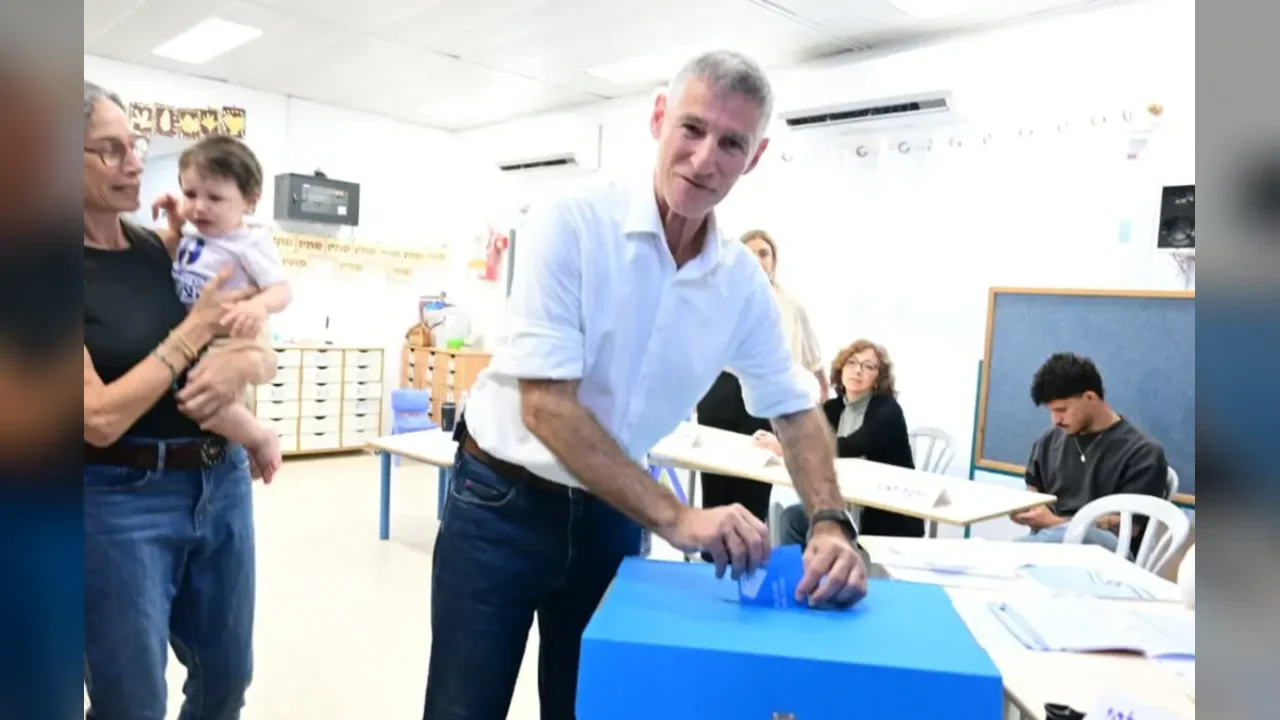
Haifa experienced a deeply divided Election Day, with residents expressing starkly contrasting views on the future of Prime Minister Benjamin Netanyahu's leadership, the ongoing security challenges, and the country's socio-political trajectory. While some voters voiced steadfast support for the Likud leader, citing stability and security, others participated with a fervent desire for government turnover, reflecting the city's complex political mosaic.
Despite a vibrant public discourse and massive local anti-government protests second only in scale to Tel Aviv's Kaplan demonstrations, voter turnout in Israel's third-largest mixed city has historically lagged behind national averages. Data from previous parliamentary elections recorded participation rates of 55.11% in 2021 and 55.53% in 2022, significantly lower than the national average of over 70%. By 2:00 PM on Election Day, turnout stood at 27.3%, leaving open the question of whether local civic engagement would ultimately translate into ballot box participation.
Diverse Voices Across Neighborhoods
The street-level sentiment in Haifa spans a broad spectrum. Supporters of Benjamin Netanyahu emphasized the need for strong leadership to end ongoing regional conflicts and secure a peaceful future for the next generation. Conversely, voters seeking political change highlighted concerns over personal security, the erosion of public order, and the broader social divisions affecting Israeli society. Several citizens pointed to the city's unique demographic fabric—spanning the affluent Carmel neighborhoods, the diverse Hadar and Neve Sha'anan districts, and the coastal areas—as a microcosm of Israel's broader societal tensions and potential for coexistence.
Prof. Itai Beeri of the University of Haifa's Department of Public Administration and Policy noted that Haifa's political apathy cannot be viewed through a single lens. Unlike smaller, homogenous towns where community and family pressure heavily incentivize voting, large mixed cities often foster a sense of individual detachment. Furthermore, the city's historical identity as "Red Haifa," traditionally tied to labor movements, has evolved into a diverse center supporting centrist and anti-Netanyahu factions, alongside significant communities of post-Soviet immigrants and Arab residents.
As polling stations remain open, the central question for Haifa is whether its visible public activism and widespread demonstrations will finally close the gap between street protests and electoral turnout.