Do Goldfish Really Have a Three-Second Memory Span?
Popular culture claims goldfish have a mere three-second memory span, but scientific studies prove they retain learned information for weeks and months, possessing impressive spatial skills.
When someone close to us forgets where they left their keys or why they opened the refrigerator, we often joke about having a goldfish memory. The popular assumption rooted in this saying claims that goldfish possess a mere three-second memory span, making every loop around their bowl a brand-new discovery. Pop culture reinforced this trope with Dory from the animated film Finding Nemo, cementing the image of the forgetful fish.
Yet scientific reality tells a completely different story. Goldfish memory is far more advanced than folklore suggests, with experiments showing they retain learned behavior for days, weeks, and even months. From an evolutionary standpoint, a three-second memory would mean certain doom in the wild, as fish would fail to remember food sources, predator locations, or safe hiding spots.
Scientific Proof of Fish Intelligence
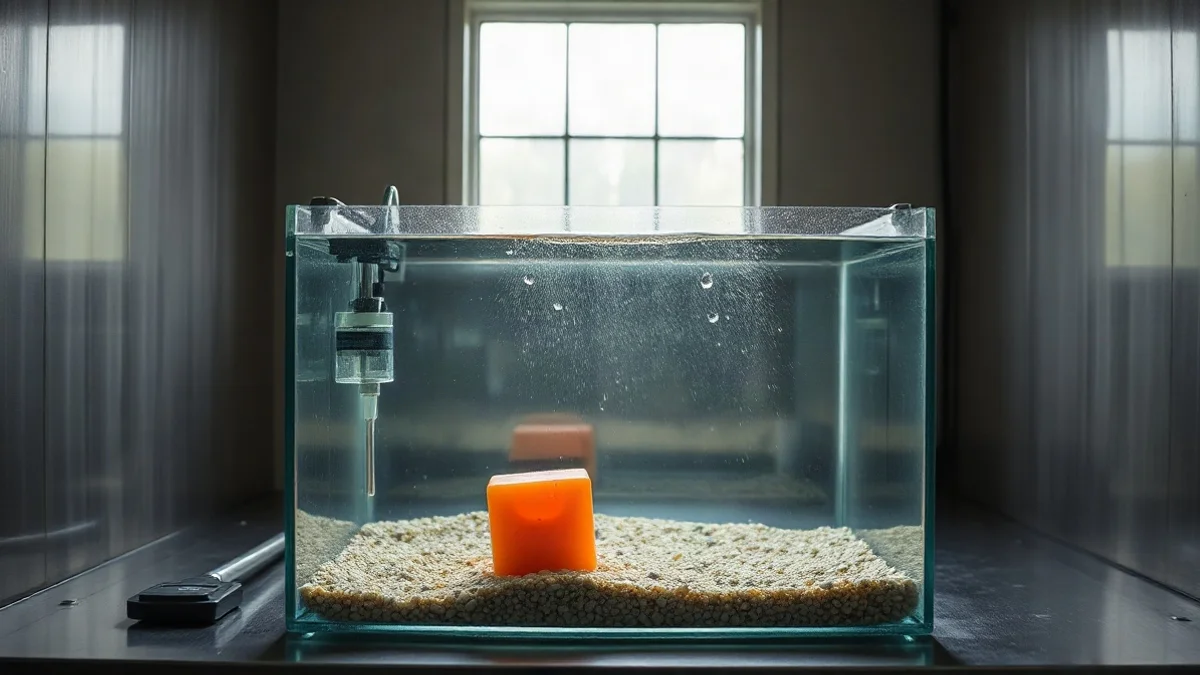
One of the most famous experiments was conducted back in 2008 by Rory Stokes, a 15-year-old Australian high school student. For a science fair project, he dropped a red Lego brick into a tank every feeding time and scattered food around it. Within three weeks, the time it took the fish to reach the brick dropped from over a minute to less than five seconds. When Stokes removed the brick for six days and then reintroduced it, the fish swam straight to it in just 4.4 seconds, proving long-term retention.
Academic research has consistently backed up these findings. In 2003, researchers at the University of Plymouth trained goldfish to push a lever for food. When the mechanism was restricted to one hour a day, the fish quickly learned to operate it at the exact correct time and ignore it otherwise. Furthermore, a 2022 study at Ben-Gurion University demonstrated that goldfish could even navigate a robotic wheeled vehicle to target destinations for food, showcasing remarkable spatial awareness and cognitive mapping.
Why Did the Myth Persist?
So where did the famous three-second rule originate? One hypothesis suggests the myth serves as a psychological coping mechanism. For generations, people kept goldfish in small, round glass bowls under dismal conditions with poor oxygenation and no hiding spots. Believing the fish immediately forgot their surroundings made it easier to overlook inadequate care. Today, animal welfare laws in several European countries ban keeping goldfish in such restrictive bowls.
Ultimately, goldfish possess a robust memory that spans weeks and months, shattering the ancient myth. So the next time someone accuses you of having a goldfish memory, you might as well take it as a compliment.