Moshe Feiglin Outlines Platform on Religion, Judiciary, and Security
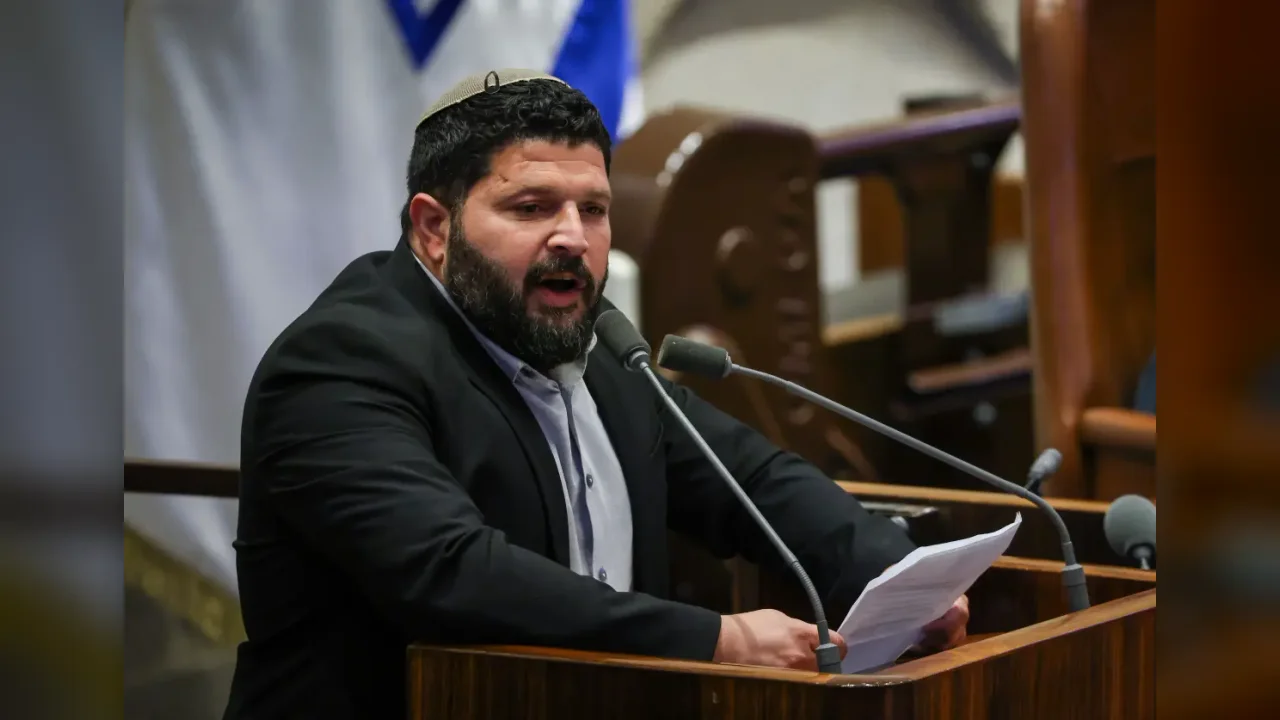
Moshe Feiglin, running on the Religious Zionism list, outlined his platform at an election conference, detailing positions on state-religion relations, Supreme Court reform, and national security.
Two days before the election to the 26th Knesset, Moshe Feiglin, chairman of the Zehut party and running in the second spot on the Religious Zionism list headed by Bezalel Smotrich, outlined his platform at the "Olam Katan" election conference on Sunday, addressing state-religion relations, judicial reform, and national security.
When asked whether he would support increasing state funding for yeshivas, Feiglin expressed opposition to state intervention in religious affairs, emphasizing his view that citizens should be free to choose how their tax money is allocated. Regarding public transportation on Shabbat, he clarified that while he opposes public transit operations on the Sabbath and weekdays funded by the state, he does not favor sweeping legislative bans. Asked specifically whether he would vote to bring down a law that comprehensively bans public transportation on Shabbat, Feiglin answered affirmatively, stating that state involvement should be minimized.
This position aligns with the Zehut party platform, which advocates for the privatization of public transportation companies and transferring decisions regarding Sabbath operations to local communities. In an interview last week, Feiglin explained that religion and state cannot be completely separated in a Jewish state, but religion must be separated from politics.
Feiglin further detailed the first legislative bill he intends to advance in the upcoming Knesset: a declarative law titled "Israel - State of the Jewish People," suggesting that the definition also appear on Israeli identity cards. Although the Nation-State Law already anchors Israel's status as the nation-state of the Jewish people, Feiglin aims to reinforce his ideological vision regarding the country's identity.
Addressing the judicial system, Feiglin proposed that the public be allowed to directly elect Supreme Court justices instead of utilizing the current appointment committee system. "The state is not the solution, it is the problem," he remarked, arguing that decentralizing authority to the public would allow Israel's Jewish identity to flourish organically.
Turning to national security, Feiglin criticized current defense concepts and the shortage of ground forces, asserting that the strategic mindset that preceded the October 7 attacks has yet to change. When asked about his preferred cabinet position, he indicated he would likely demand the Defense portfolio. "I am not going to be responsible for the next massacre," he declared. Concluding his remarks, Feiglin embraced his messianic worldview, stating, "I am a proud messianist, I walk with the Temple emblem. These are my dreams."