Wave of False Bomb Threats Disrupts European Aviation and Maritime Transport
A wave of false bomb threats disrupted European aviation and maritime transport, triggering emergency landings, fighter jet scrambles, and heavy economic losses.
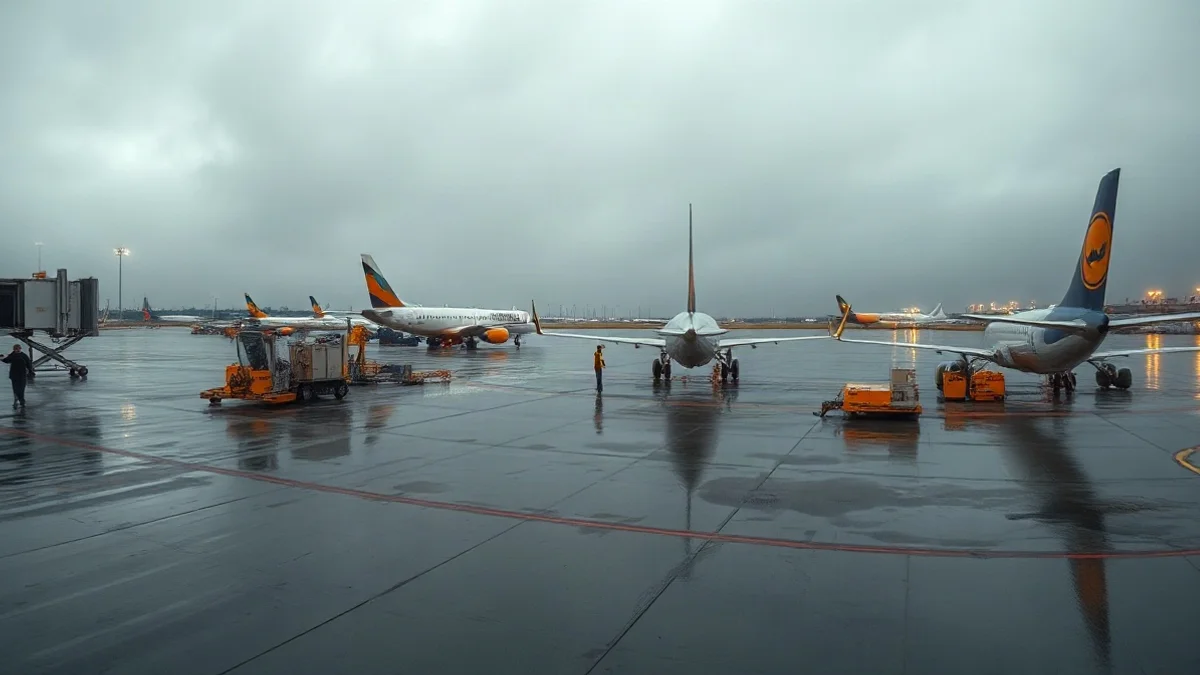
A massive wave of false bomb threats crippled European aviation over the past week, triggering emergency landings, flight diversions, and the scramble of fighter jets across the continent.
The peak of the disruptions occurred on Thursday, when at least 25 different passenger flights received false bomb alerts. A KLM flight from Amsterdam to Tel Aviv was forced to divert to Bucharest, where all passengers and crew were evacuated for security sweeps. Another aircraft flying from Dublin to Rome with 151 passengers on board made an emergency landing at a military air base in France. Additional threats disrupted flights arriving in Prague, Bulgaria, Brussels, and Rome, alongside a Wizz Air flight from Milan that safely landed in Bucharest.
The wave of alerts began earlier last month but escalated sharply at the beginning of the week. On Monday, a Wizz Air flight from London to Sofia was diverted to Budapest and escorted by Hungarian fighter jets. Tuesday saw at least seven additional threats, including a LOT Polish Airlines flight from London to Warsaw that was rerouted to Modlin Airport, and a SAS flight from Copenhagen that prompted the temporary closure of a runway at Chopin Airport. Two Ryanair flights bound for Rome from Lisbon and Dublin also received threats, with the Dublin flight escorted down by two Italian Air Force fighter jets. Similar security protocols affected flights operated by Ryanair and other carriers across various European hubs.
Maritime Threats and Economic Fallout
The wave of psychological warfare also spilled over into maritime transportation, after an Israeli passenger ship operated by Mano Maritime received a false bomb threat, prompting rigorous security searches before being cleared.
British officials condemned the incidents as malicious acts of deception, with industry experts increasingly viewing the campaign as a coordinated psychological operation designed to sow panic, test emergency response times, and disrupt international transport networks. Beyond the immediate security concerns, the disruptions carry heavy economic and operational costs. Unscheduled diversions generate massive expenses in extra fuel, airport fees, and passenger accommodations. Low-cost carriers, which rely on tight turnaround schedules, are particularly vulnerable, raising concerns that the ongoing disruptions could drive up ticket prices.
International Coordination and Technological Response
Security authorities now face the classic "boy who cried wolf" dilemma, risking complacency amid a barrage of false alarms while remaining legally obligated to treat every threat as credible. To prevent widespread airspace paralysis, aviation officials are exploring the deployment of artificial intelligence systems to rapidly filter and assess the credibility of threats in real time.
In response to the crisis, European Commissioner for Transport Apostolos Tzitzikostas announced the activation of a new EU mechanism to coordinate intelligence-sharing among member states and the European Union Aviation Safety Agency (EASA). Meanwhile, the International Air Transport Association (IATA) strongly condemned the false threats, urging authorities to track down those responsible while reassuring the public that security protocols remain fully mobilized.