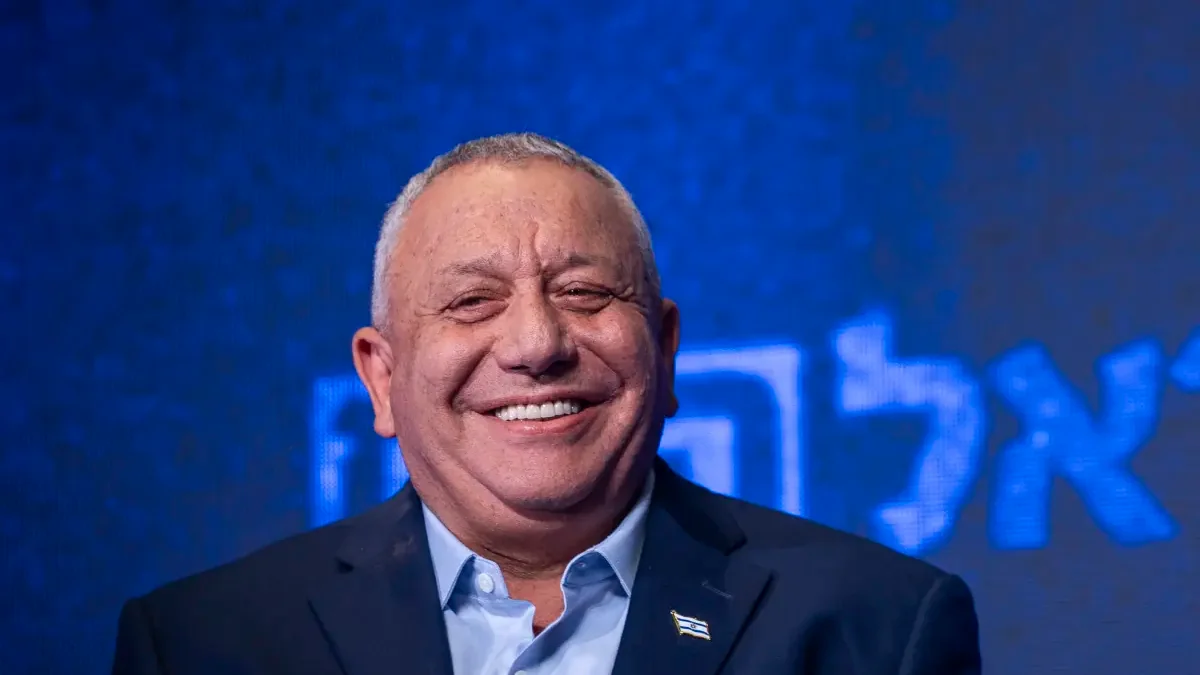
Eisenkot has completed a turnaround, but his key to power lies elsewhere
Israel is heading to elections, and Globes' poll of polls brings the latest data from all media outlets. Who is strengthening, who is weakening, and how does it affect the balance of power between the camps? This time: Eisenkot takes the lead at the expense of Likud, but forming a government is still not within reach.
The Globes poll of polls is back. Israel is heading to elections, and we will accompany the campaign this time as well. We will bring the most up-to-date polls from the leading media outlets and examine who is strengthening, who is weakening, and who is hovering around the electoral threshold.
What are the data? A turnaround at the top: Yashar, led by Eisenkot, becomes the largest party with 23 mandates, while Likud drops to 22. Beyad, led by Bennett, rises by one mandate to 15, The Democrats remain with 10, Yisrael Beiteinu 9, Otzma Yehudit rises to 8, United Torah Judaism and Shas receive 8 each, Hadash-Ta'al, Ra'am, and Religious Zionism with 5 each. The party of Yoaz Hendel and Chili Tropper and the Blue and White party led by Benny Gantz do not pass the electoral threshold.
What is the conclusion? The importance of the bloc is sharpened: even though Eisenkot's party has captured the first place, it is still not enough for it to form a government, as his camp wins only 59 mandates without the Arab parties.
Behind the numbers: Apparently, one could argue that the "turnaround" described here is technical only, since this week no poll was published by Channel 14, where Likud consistently receives many more mandates than in other polls (32-33 mandates, compared to 21-24 in others).
But this is only a partial explanation. In fact, looking at the polls of recent weeks reveals that even if one sets aside the Channel 14 poll, the other polls indicated a tie between Likud and Yashar, with Yashar's lead expressed, at most, only in the digits after the decimal point.
This time, not only does Yashar lead by a whole mandate, but in most polls (Channels 11 and 12 and Maariv) it leads, and in the other two (Channel 13 News and Israel Hayom) it is tied with Likud.
However, as mentioned, it is doubtful that this will be enough for the opposition to seize power. Only in the Maariv poll does it win a majority in the Knesset without the Arab parties (61 mandates), while in the polls of the three channels (11, 12, and 13) it receives 59 or 60 mandates. The most pessimistic poll from the opposition's perspective was that of Israel Hayom, in which it settled for 56 mandates (while the Arab parties received 11 more together).
Additional figure: What will give the opposition the victory? A comparison between the polls reveals a quite surprising possible answer: Bennett. Let us explain. We said that the only poll in which the opposition wins a majority without the Arab parties is the Maariv poll. What is special about it? That the Beyad party led by Bennett receives two mandates more than the average, and the Likud party receives two mandates less than the average — and the other blocs remain similar. That is, the only poll in which the opposition wins is the one in which two mandates move (directly or indirectly) from Likud to Bennett.
But this still does not mean that this is what is happening in reality. Not long ago, we showed in the Mishrokit that recently there have been certain indications of a transfer of mandates (in both directions) between Likud and the Bennett party, but when looking at a wider prism, the evidence is not very convincing.
So what is the bottom line? It is still too early to say, but it is possible to summarize the interim findings as follows: it is difficult to say that Bennett is receiving mandates at the expense of Likud — but if that happens, perhaps that is what will bring the opposition to power.