From Har Nof to A-Tur: Jerusalem is looking for shade
Extreme heat waves are already a routine event, and the streets of Jerusalem are getting hotter year by year. Now, through a municipal master plan, significant budgets, and creative pilots in collaboration with the "Derech Tzel" ("Path of Shade") organization, the capital is trying to turn trees from a landscape element into an existential infrastructure - and explaining why shade in the public space has long ceased to be a luxury.
Heat waves are becoming more frequent, prolonged, and extreme year by year, and the urban space in Jerusalem — with its narrow alleys, old neighborhoods, and the massive construction that characterizes the wave of urban renewal — is also heating up rapidly. In a reality of noticeable climate change, the Jerusalem challenge has long since ceased to be limited to operating an air conditioner or cooling the house, but rather the basic ability of residents to walk down the street, reach the bus stop, wait for the light rail, or play with children in the public park without being exposed to dangerous heat loads. This significant and burning issue was also at the center of the 54th Annual Conference on Science and the Environment, held in the capital. At the conference, President Isaac Herzog called for viewing the coping with climate change as a topic that is "above all controversy," while the Mayor of Jerusalem, Moshe Lion, presented the municipality's policy that combines urban development with nature conservation, including the precedent-setting decision to preserve more than 11,000 trees on the Reches Lavan ridge. Beyond the festive declarations and conferences, the real test is measured on the Jerusalem street in the summer noon. And there, it turns out, the road to a shaded and resilient city is still long and challenging.
The national mission: 70% shade
To understand the conceptual change taking place today in Jerusalem, one must look at the broad national move. In recent years, the understanding has grown in the government that the lack of shade in the urban space is not an aesthetic nuisance or a gardening problem, but a real threat to public health, the ability to walk on foot, and the vitality of the city. In this framework, the state set an especially ambitious goal: by the year 2040, the rate of shading in the built public space in Israel will reach 70%. To turn the government's decision from a working paper into a reality on the ground, the "Derech Tzel" organization was established — a professional body supported and guided by the state, in collaboration with the Ministry of Environmental Protection and other government ministries, whose goal is to accompany local authorities in formulating and implementing strategic plans for managing the "urban forest." The organization brings with it an innovative planning concept, combining agronomy, landscape architecture, geoinformatics (GIS), and satellite-based mapping, to treat shade as an inseparable part of the future infrastructure planning of cities.
Not a decoration — essential infrastructure
Israel's cities are experiencing a climatic phenomenon called "urban heat island" — asphalt and concrete surfaces, the walls of residential buildings, and city infrastructure absorb solar radiation during the day and emit it as heat. The result is that in the city center it can be 2 to 10 degrees hotter than in the open areas around it. Public shade — and especially natural tree shade — acts as the most effective climatic shield. It prevents the sun's rays from hitting sidewalks and roads directly, thereby preventing heat accumulation in the first place, and also emits moisture and actively cools the air around it. "The tree is an urban infrastructure for all intents and purposes," explains Noa Shavit-Gogol, the professional director of the "Derech Tzel" organization. "For decades, trees were looked at as a landscape, gardening, or cosmetic element only — something added at the end of the project to make it look nice. Today it is clear that they provide essential environmental services: they reduce heat loads, absorb runoff water and prevent flooding, filter pollutants, improve air quality, and allow for safe and pleasant public presence." According to her, unlike artificial shading solutions like pergolas, fabric sheets, or awnings — which produce shade only and may even accumulate heat and radiate it back to the street — trees actively cool their environment. "Through a natural process of transpiration (evaporation of water from the leaves), the tree acts as a kind of natural air conditioner. Therefore, the influence of trees on the urban microclimate at Jerusalem temperatures is dramatic and unparalleled."
On paper, the conceptual change in Jerusalem has already occurred. As part of the municipal master plan for shading and afforestation, "Ma'alot BeTzel" ("Rising in Shade") — which was formulated with funding from the Ministry of Environmental Protection and under the guidance of the "Derech Tzel" organization — ambitious goals were set for the years 2032 and 2040. The program was managed by the Environmental Quality Authority in the Jerusalem Municipality, in collaboration with the Improvement Department, the Landscape Department, the City Architect, and the planning, infrastructure, education, and transportation departments. To base the program on real data, measurement tools developed at "Derech Tzel" were used — primarily comprehensive mapping of tree canopy coverage. The mapping made it possible to see exactly where urban "heat islands" exist, which streets are exposed to the sun, and which neighborhoods need an urgent addition of trees. As part of this project, a dedicated budget was allocated, which included the design of young trees and their preservation, alongside the planting of about 2,700 new trees throughout the city at an estimated cost of about 4 million shekels and the regulation of advanced irrigation systems. However, the road to full realization of the program requires overcoming not simple physical obstacles.
Shade is hard to grow
If the importance of trees is clear, why are so many streets still exposed to the scorching sun? According to Shavit-Gogol from "Derech Tzel," the urban tree is in a constant struggle for survival for its place. "It competes with underground infrastructures of water, sewage, electricity, and communication, parking lots, bicycle paths, light rail tracks, and intensive urban renewal plans. In addition, in many authorities, responsibility is split between several departments, and sometimes the information is not synchronized." The problem is not limited to the number of trees, but also to the way they are planted. Yuval Dov Jean, director of the local authorities division at "Derech Tzel," explains that "to get in twenty or thirty years tree-lined avenues that provide real shade on a Jerusalem street, one must start correctly already today. In practice, we saw quite a few trees that were planted in the past in very small habitats, sometimes a meter by a meter inside concrete. In such conditions, the tree simply will not be able to develop to a size that will provide significant shade." According to him, the professional approach promoted by "Derech Tzel" requires allocating sufficient soil volume to the tree, choosing resistant species suitable for the Jerusalem mountain climate, and thinking decades ahead. To deal with this challenge on the ground, the Improvement Department and the Infrastructure Department in the Jerusalem Municipality formulated a special work procedure for early coordination between the municipality and infrastructure companies (electricity, water, communication). The goal is to ensure the preservation of existing trees and the utilization of planting potential in every development project. In cases where it is not possible to plant trees due to engineering or safety limitations, complementary shading solutions are examined.
Justice must be done
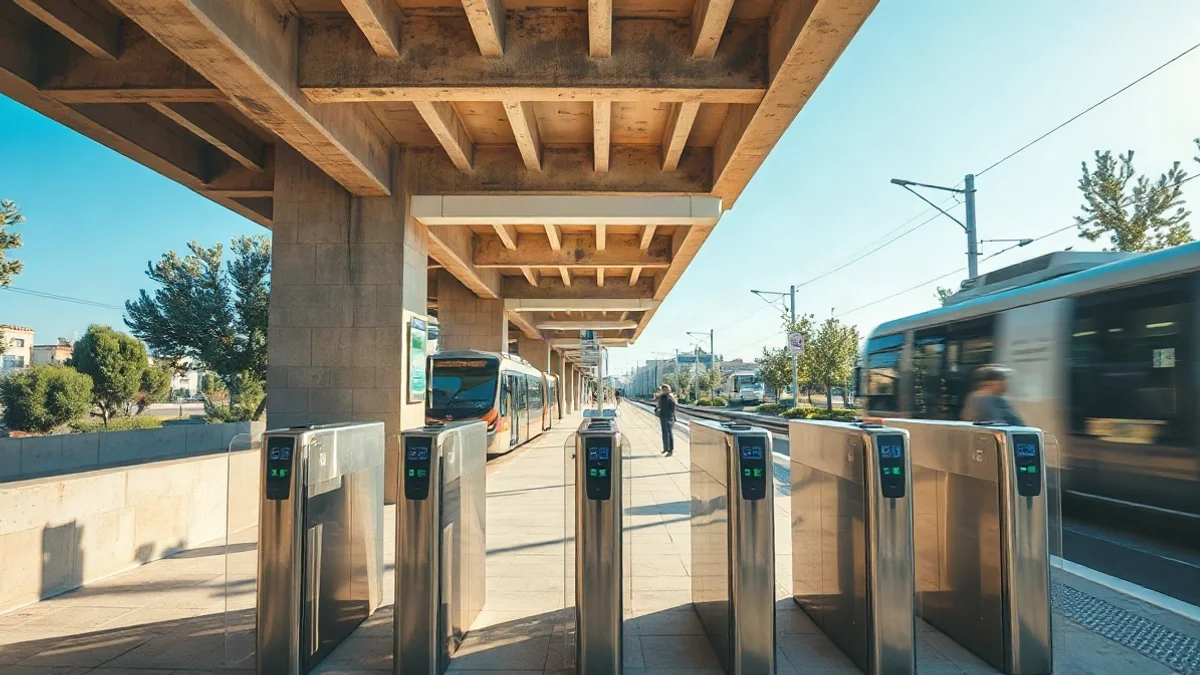
One of the central principles promoted in Jerusalem is environmental and distributive justice. Managing the urban forest is not only a climatic issue, but also a social one: areas lacking shade are those where it is harder to walk on foot, travel by public transport, or stay outside. When certain neighborhoods enjoy green and shaded avenues and others remain exposed, significant social and health gaps are created. The municipal program "Ma'alot BeTzel" identified "preferred spaces for shading" — such as bus stops with over 900 validations per day, schools and educational complexes with over 300 students, community centers, and mosques. From these data, creative solutions were born that are adapted to the unique character of the capital's neighborhoods.
The community gets involved
Alongside the large infrastructure programs and the ambitious planting target of about 11,000 trees per year until 2040, the municipality is promoting community initiatives designed to connect residents to the urban forest. As part of the "Saviv HaEtz" ("Around the Tree") program, local communities were recruited to plant trees in public areas in the neighborhood and nurture them. At the same time, the "Tree Kindergartens" program of the Education Administration involves ten schools, where students grow young trees for a year and then plant them in the school's surroundings. It is interesting to discover that in practice, the highest demand for participation in community initiatives comes precisely from residents of the old and established neighborhoods, where shade coverage is already relatively extensive. However, the municipality emphasizes that the main planning and budgetary priority is given to neighborhoods where the lack of shade is most critical. "It is very important to understand that a young tree does not replace a mature tree," concludes Shavit-Gogol. "It takes a tree decades to reach a wide and shading canopy. Therefore, one must preserve existing trees at all costs and not just plant new ones." The road of Israel's capital to becoming a shaded city is still long, but the combination of a national mission, data from the field, long-term planning, and connection to the territory and the community gives hope that in the coming years, walking on the Jerusalem street in the noon of July-August will become a much more pleasant and healthy experience.
Shading solutions in the capital
-
"Hot Neighborhood" pilot in Har Nof: as part of the initiative, plantings are planned along main streets, open areas, and landscaped beds, to create continuity of shade in the public space and allow continuous walking in the shade.
-
Planting in private courtyards in the east of the city: in the neighborhoods of East Jerusalem, which suffer from a severe shortage of open public spaces suitable for planting, the municipality began to promote a creative solution: planting trees in private courtyards facing the street, so that the tree canopy will shade the public space. A first pilot was successfully completed in the A-Tur neighborhood, and following it, an expansion to the Issawiya neighborhood is planned.