"In a project on the first line to Yarkon Park, there is a negotiation for a penthouse at 100 thousand shekels per square meter"
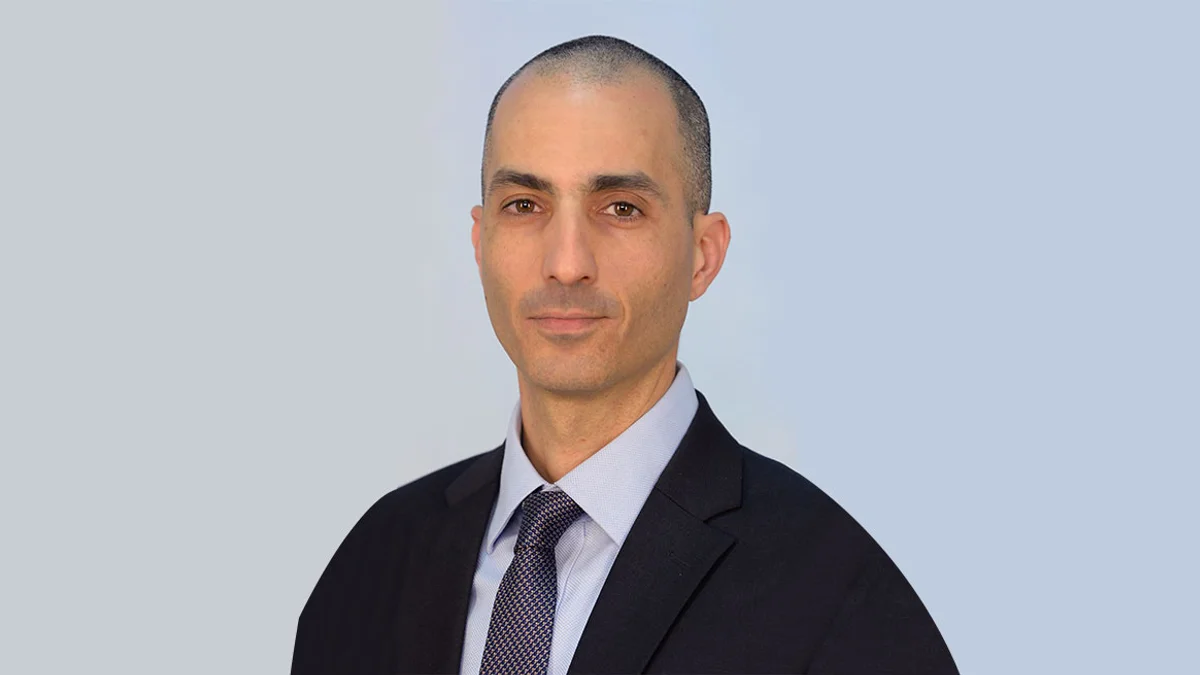
Ili Bar, co-CEO of the urban renewal company Eco City, explains why, despite the slowdown in the residential sector, deals are still happening, including in Tel Aviv; he discusses a 200 million shekel investment by Menora Mivtachim and warns: "Fewer projects are getting underway today, and this will come back to us like a boomerang."
Despite the slowdown in the residential real estate sector in general and the urban renewal market in particular, especially in high-demand areas, institutional bodies continue to pour capital into companies engaged in Pinui-Binui (evacuation and construction) projects. Recently, the insurance company Menora Mivtachim provided the private urban renewal company Eco City with a credit line of 200 million shekels, as part of an agreement that joins a series of deals carried out by institutional bodies in the field. CBS: The rate of households planning to purchase an apartment has been cut by more than half.
From the perspective of Ili Bar, co-CEO of the company, this is more than just a one-off financing deal. In an interview with "Mamon," he explains why, in his view, a gap has opened between companies struggling to sell and those that continue to execute deals, why he believes the declines in apartment prices are not sweeping, and even warns: "Fewer projects are getting underway today, and this will come back to us like a boomerang."
Eco City, which operates mainly in Tel Aviv, is controlled by the Reality Fund, and alongside it, Poalim Equity and managing partners Ili Bar and Dudu Reshef hold shares in the company. In the last month, the company completed the acquisition of a construction company with an unlimited G5 contractor classification, a move that seeks to expand its independent execution capabilities.
"Menora's decision comes precisely at a complex time for the market," says Bar, "it is based on the performance we have shown and on the understanding that there is a gap between the headlines in the newspapers and what is actually happening. The headlines sometimes present a one-dimensional picture, but when you zoom in, you see that the market is much more complex." According to him, large companies are acquiring projects, entering into partnerships, and small companies are merging or being acquired. The institutional bodies recognize that the large urban renewal companies are becoming key players in the housing market, and are looking for companies that know how to manage the entire value chain — from planning, through execution, to marketing and sales.
Behind the deal are also the company's figures: Eco City reports that in the first half of 2026, its sales volume grew by more than 30% compared to the same period last year, while some companies in the industry reported a slowdown in sales. Today it is executing 12 projects, and in the next half year it is expected to begin execution of five more. According to Bar, the explanation lies in the fact that the Tel Aviv housing market is splitting more and more between different companies.
"Most of the buyers in central Tel Aviv are people who buy to live, not investors. For three and a half years they sat on the fence and postponed decisions, but there comes a stage where you can no longer continue to wait. People are returning to make deals, but they are much more selective." According to him, contrary to the perception that price is the central parameter, buyers today give greater weight to the quality of planning and the developer's ability to execute. "There is much more supply today, and therefore people choose the product they think is higher quality. Price per square meter is not everything. Just as not every car with four wheels and an engine is the same car, not every apartment is identical to another."
"Not the whole market is falling"
In recent months, the Central Bureau of Statistics (CBS) indices point to a decrease in apartment prices, but Bar believes the picture is more complex. "I see price decreases among certain players, but not everywhere," he says. "There are also projects where there are no decreases at all, and in special locations, we even see increases." According to him, in a project on the first line to Yarkon Park, for example, we are currently negotiating a penthouse at a price of about 100 thousand shekels per square meter — a price we haven't seen even in better years. A differentiation is being created between the players. There are companies that are forced to lower prices, and there are others that manage to continue selling even at higher prices.
Recently, he adds, the company sold a penthouse apartment in the Tzaitlin project in the city that never stops for a sum of about 85 thousand shekels per square meter to a couple of high-tech workers under 40. In recent times, the company has expanded outside of Tel Aviv and is promoting projects in Kiryat Motzkin, Hadera, Ramat Gan, and Bat Yam. According to Bar, the company has identified local authorities where there is a real willingness to promote urban renewal.
However, he admits that one of the main challenges today is promoting urban renewal outside of high-demand areas. "We all understand that urban renewal in the periphery is a national goal," he says. "But companies can only execute projects that are economic. Grants can help a lot. On the other hand, the complementary land model has proven to be less effective. In the end, too many projects get stuck in pricing gaps between the state and the developers."
At the same time, he also criticizes some of the local planning and construction committees, which he says continue to approve projects with marginal profitability. "There is no reason for every project to get underway on the edge. When there is not enough safety margin, a small change in the market is enough for the project to no longer be economic. This is exactly what we see today — there are quite a few plans that have been approved, but are simply sitting on the shelf and drying out." According to him, this phenomenon itself could affect the market in the coming years. "We are already seeing fewer projects going up for execution. If there are fewer housing starts and fewer new apartments reaching the market, eventually the supply will decrease and the pressure on prices will return. People continue to buy apartments even in a complex period, and therefore stopping projects today could turn into a shortage tomorrow."