Dan Public Transportation Enters Heavy Truck Sector with Windrose EV
Dan Public Transportation enters the heavy vehicle sector by importing a heavy electric truck from China's Windrose for a local pilot program with Taavura.
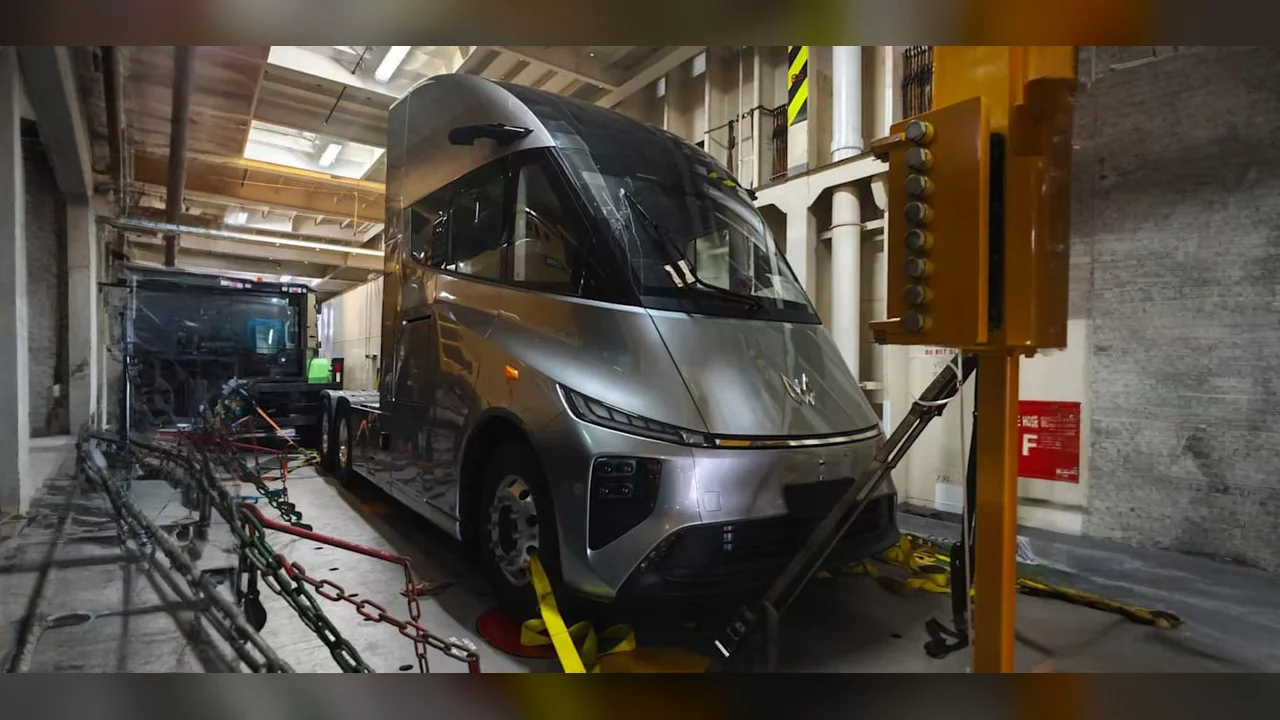
Dan Public Transportation is expanding its operations into the heavy vehicle sector by bringing an electric heavy-duty truck manufactured by China's Windrose to Israel. The import is handled through Pundan, the electric bus importer owned by Dan and its partners, marking the group's first venture into the truck market after years of focusing on public transit and buses.
The electric tractor unit is engineered from the ground up as an electric platform rather than a conversion of a diesel model. According to the manufacturer, it features a battery capacity exceeding 700 kWh and delivers a declared driving range of roughly 670 kilometers when fully loaded. Its propulsion system puts out a peak output of approximately 1,400 horsepower, and the vehicle supports ultra-fast charging capabilities that can replenish the battery from 20% to 80% in under 40 minutes.
Design Parallels and Efficiency
The vehicle bears a striking visual resemblance to Tesla's Semi truck, sporting an aerodynamic profile, a central driver's seat instead of a traditional left-side layout, and exterior styling aimed at reducing drag. While international media have noted the similarities, Windrose emphasizes that its vehicle is an independent design. The truck is equipped with side cameras instead of conventional mirrors and regenerative braking to recapture energy during deceleration, which the manufacturer estimates can cut annual energy and maintenance costs by about 80% compared to diesel trucks.
Pilot Program and Local Challenges
The initial imported unit is slated for a pilot program with Taavura, while two additional trucks have been dispatched to Europe for testing in Poland and Spain. Regulatory approval remains a key challenge, as the local market requires specific licensing reviews despite the truck holding European certification. Furthermore, fleet operators must evaluate high-power charging infrastructure and real-world performance under heavy loads before heavy electric trucks can compete effectively with conventional diesel fleets.