How Climate Change Transforms Our Reading of Classic Novels and Coastlines
Climate change is reshaping how readers experience literature, turning real historical landscapes like Brooklyn beaches into fiction while making 19th-century fantasy feel like reality.
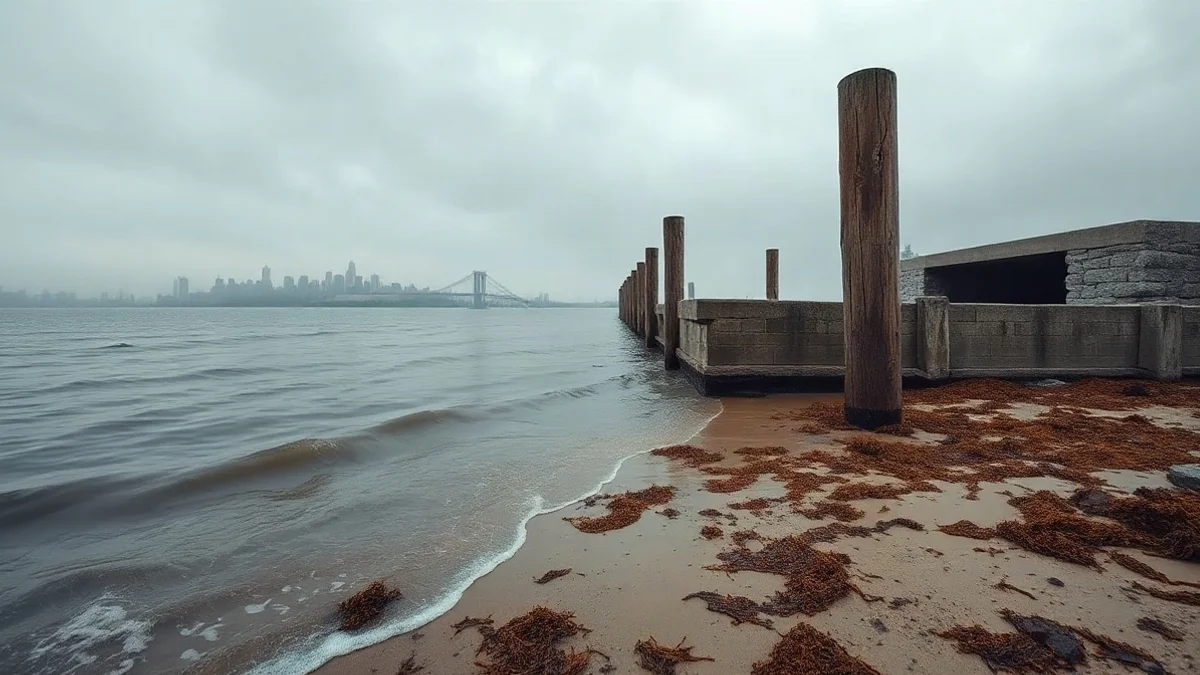
A reader opening a novel set in Brooklyn a century from now might encounter a beach already swallowed by the sea, transforming a real-world location into what feels like pure fiction. Conversely, a scene imagined by Edgar Allan Poe in the 19th century, where waters warm as a boat approaches the South Pole, may appear increasingly aligned with reality.
This paradox is examined by literary scholar César Pablo Domínguez Prieto. While literary scholars have long studied how works acquire new meanings across eras and cultures, climate change introduces an unpredictable dimension to this phenomenon. The text remains unchanged, yet readers experience it from a transformed world, where elements once taken for granted now demand active imagination.
The Shifting Shorelines of Literature
In Laura Segal's 2013 novel "Half the Kingdom", Brooklyn shorelines appear vividly, while Philip Hoor's "The Sea Inside", published the same year, chronicles coastal landscapes from southern England to Sri Lanka. Many of these locales face potential inundation as global sea levels rise. Similarly, Joseph Conrad's 1912 novella "Freya of the Seven Isles" features shallow sandbars in the Java Sea that have likely vanished beneath the waves today.
Real-world changes often unfold slowly, as biologist Rachel Carson noted in her 1951 book "The Sea Around Us", observing that coastlines have never remained permanent. Human activity now accelerates these shifts, with NASA satellite measurements showing that global mean sea levels have risen by more than ten centimeters since 1993.
Engineering Defenses and Fictional Visions
Other literary works confront human attempts to control rising waters. In Theodor Storm's 1888 novella "The Rider on the White Horse", the protagonist studies geometry and constructs an embankment to protect Germany's North Sea coast, confident that the barrier will endure for centuries until a massive flood tests his calculations. Reading this today, the promise of longevity prompts questions about how warming seas will outpace historical engineering.
At the same time, imaginative literature gains new plausibility. In Poe's 1838 novel "The Narrative of Arthur Gordon Pym of Nantucket", the protagonist sails south toward the pole into increasingly warm waters, a concept that was purely fantastic at the time. A century from now, Pym's voyage and Brooklyn's disappearing beaches will exist side by side on library shelves, where the physical reality of the past may ultimately require more imagination than fiction.