Direct Vehicle Shipping From China to Israel via Suez Canal Resumes
Direct vehicle shipments from China to Israel via the Suez Canal have resumed after three years, as automotive importers also prepare to introduce humanoid robots and launch new models.
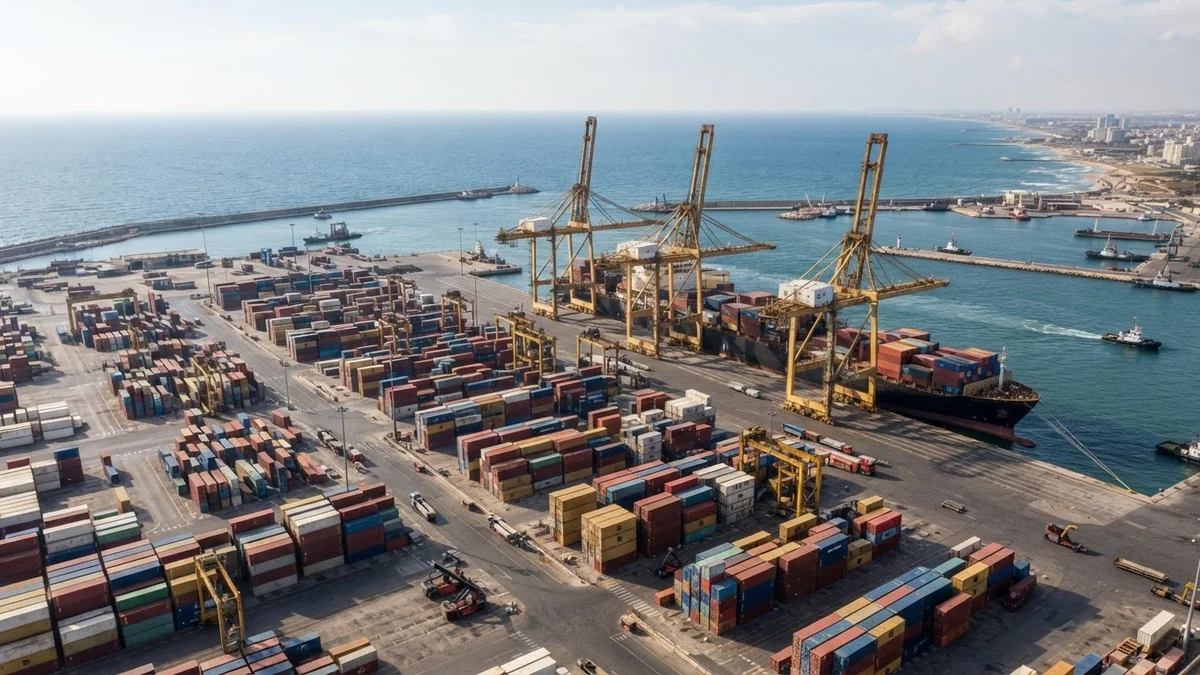
Direct maritime vehicle shipments from East Asia to Israel's Mediterranean ports through the Suez Canal have resumed after approximately three years of disruption, following the onset of the Houthi maritime threat in the Red Sea. Two major vehicle shipments from China have recently been unloaded in containers at the Port of Ashdod, with additional deliveries expected by the end of the year to significantly accelerate domestic vehicle imports.
Since the outbreak of Houthi attacks on container and vehicle carriers heading to Israel, major shipping lines rerouted their vessels around the African continent. This extended route adds up to 20 days of transit time, frequently requiring transshipment through European ports before reaching Israel. Consequently, the total transit time for new vehicles from factory floor to domestic unloading has stretched to between 45 and 65 days, compared to 30 to 40 days via the Suez Canal.
Economic Impact and Shipping Adjustments
The longer maritime route increases freight costs for 40-foot containers from the Far East by up to 1,200 US dollars per container, depending on fluctuating fuel prices and insurance expenses. This translates to an additional cost of roughly 350 US dollars per vehicle before taxes. Official direct sailings through the Suez Canal remain constrained, as ZIM is still barred from operating its flagged vessels directly on this route, and certain global manufacturers refuse to discharge vehicles directly in Israel.
Meanwhile, the Port of Eilat experiences significantly lower throughput compared to pre-war levels. According to the Shipping and Ports Authority, Eilat handled approximately 30,000 vehicles in the first three quarters of 2026, excluding containerized deliveries—about one-third of the volume recorded during the same period in 2023.
Automotive Importers Prepare for Humanoid Robot Market
Beyond traditional vehicle logistics, several Israeli importers of Chinese automotive brands are conducting market research and regulatory compliance processes to introduce advanced humanoid robots produced by Chinese automotive manufacturers. These robots leverage manufacturing supply chains, high-safety batteries, electric motors, and advanced sensor suites derived from smart vehicle production.
Initial activities are concentrated among the importers of the Chery group in Israel, including Colmobil, Frisby, and Samelet. Some importers have already brought in pilot quantities for regulatory testing in showrooms. However, regulatory hurdles remain, particularly regarding customs classification for multi-purpose robots.
Chery currently manufactures three robotic models through its subsidiary AiMOGA, featuring advanced humanoid units designed for businesses and private consumers for tasks such as hospitality, promotion, and elderly care. Furthermore, Frisby is evaluating the import of the IRON humanoid robot developed by XPENG, slated for professional and industrial deployment.
New Vehicle Models Expand the Domestic Market
In parallel with logistical updates, Dalhom Motors has commenced regular marketing of BAIC vehicles, a brand under the major Chinese industrial conglomerate Foton. The primary offering is the B30, a hybrid crossover equipped with a 1.5-liter turbocharged engine and dual electric motors delivering all-wheel drive, priced starting at 170,000 shekels. The company is also launching two turbo-petrol crossover models, the X55 at 140,000 shekels and the larger X7 at 150,000 shekels.
In addition, Dalkar Auto introduced Mazda's electric crossover, the CX-6e, manufactured in a joint venture with China's Changan. Equipped with a 258-horsepower rear motor and a 78-kilowatt-hour battery offering a range of up to 484 kilometers, pricing for the model starts at 180,000 shekels.
Shlomo Motors has launched the Dolphin G super-mini, establishing it as the lowest-priced plug-in hybrid vehicle in Israel. Measuring 4.16 meters in length with a 425-liter trunk capacity, the model is priced between 130,000 and 140,000 shekels.