Caltech Robot Independently Assembles Structure in Space in DARPA Test
A Caltech-developed robot has independently assembled a structure in space for the first time, marking a breakthrough for DARPA's automated orbital manufacturing initiative.
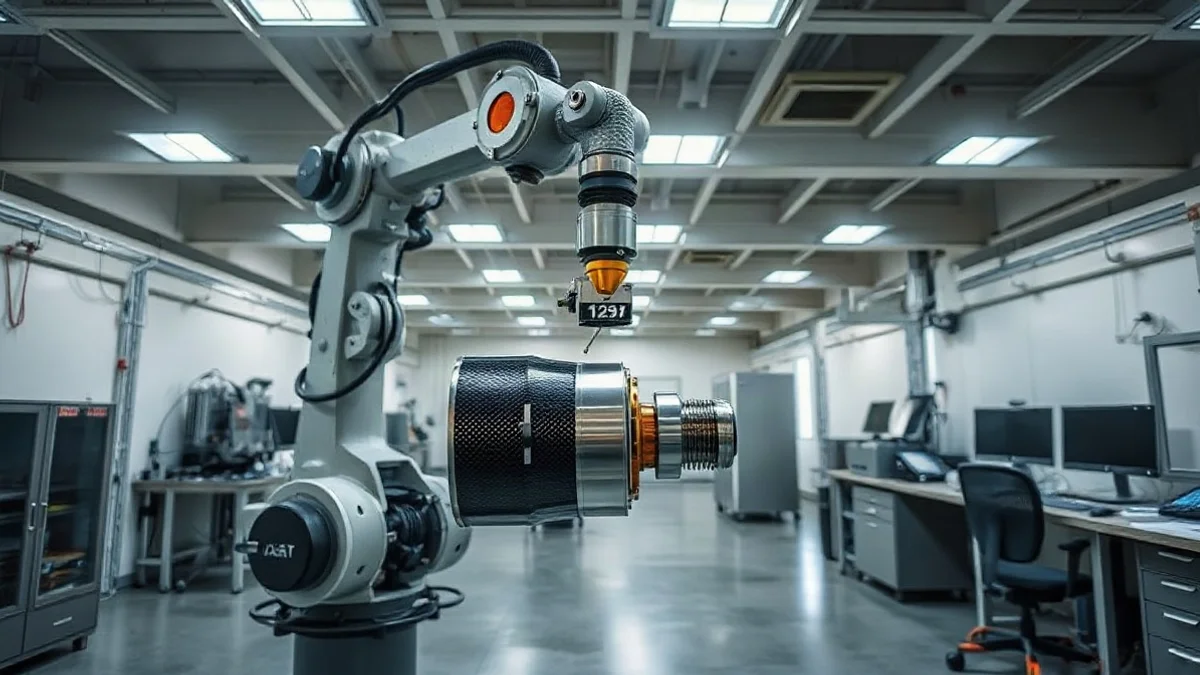
In a historic milestone for space exploration, a robot developed at the California Institute of Technology (Caltech) has independently assembled a structure in orbit without the aid of astronauts. The system, designated ASTRA, was developed under a research program by the Defense Advanced Research Projects Agency (DARPA) aimed at advancing technologies for manufacturing and assembling large structures directly in space.
According to announcements from Caltech and DARPA on November 5, 2026, the experiment successfully demonstrated that structural components can be joined in Earth orbit through automated systems. The technology relies on a relatively straightforward concept: instead of launching a massive structure folded inside a rocket or shipping separate components for astronauts to piece together, the robotic system retrieves parts from storage facilities, positions them, and assembles repetitive segments to form a lightweight, rigid structural framework known as a truss.
The ASTRA system was launched into low Earth orbit on March 30, 2026, as part of the SpaceX Transporter-16 mission. It flew aboard the Vigoride 7 spacecraft provided by Momentus, which also supported communications, power supply, and imaging. The system arrived in space with two pre-assembled segments alongside the necessary components for further construction. Following the deployment of the initial parts, the robot successfully assembled a third segment in orbit.
The original objective was to construct a 1.4-meter reflector antenna composed of composite fiber tubes, aluminum connectors, and a thin reflective surface. However, operating in the extreme environment of space presented unforeseen challenges. Researchers had to troubleshoot anomalies and test solutions using a digital twin system located in an Earth-based laboratory. Communication windows with the robot were limited to a few brief daily opportunities, requiring meticulous planning for every corrective maneuver.
Despite the hurdles, the system is not expected to complete the entire antenna before the mission concludes in December. While the full design comprises 11 segments, the demonstration successfully verified the feasibility of the automated assembly method rather than delivering a fully operational commercial antenna. DARPA envisions that future iterations of this technology could facilitate the construction of massive communication antennas, large-scale telescopes, and expansive solar arrays in space, circumventing the cargo space limitations imposed by conventional rocket payload fairings.