BYD Unveils Second-Generation Seagull Electric Car with Advanced Safety Tech
BYD has unveiled the second-generation Seagull electric mini car, featuring enhanced safety technology designed to maintain vehicle stability during high-speed tire blowouts.
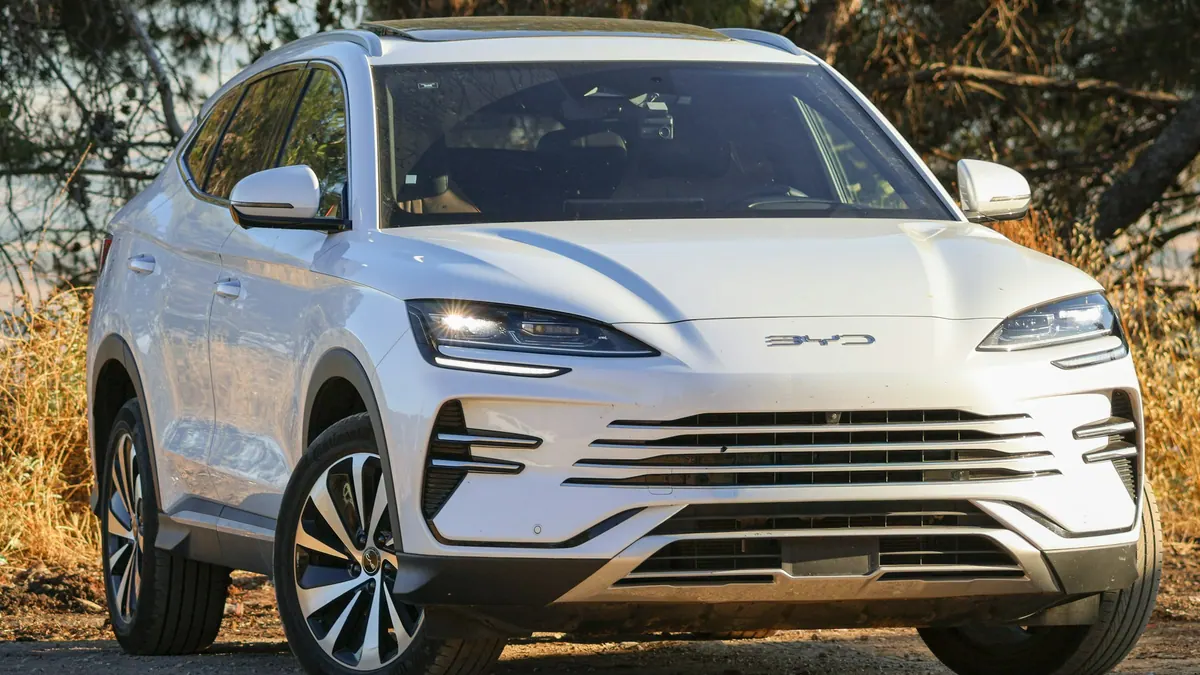
Chinese automaker BYD has unveiled the second generation of its electric mini car, the Seagull, also known globally as the Dolphin Surf. Measuring 4.2 meters in length, the updated vehicle now features five seats instead of four, upgraded batteries, and ultra-fast charging capabilities. In China, pricing starts at 65,900 yuan, or approximately $9,900. However, it is a newly introduced safety feature rather than the price tag that has recently drawn significant attention.
In a video released by BYD's Ocean division, the vehicle is shown driving at a speed of 140 km/h. Using a specialized rig, engineers induced an instant loss of tire pressure in the front wheel to simulate a high-speed blowout. Instead of swerving sharply or spinning out of control, the car maintained its lane, decelerated smoothly, and came to a safe stop. It is important to note that the demonstration was conducted under controlled conditions by the manufacturer rather than as an independent safety test.
While the first generation of the model has been available internationally and in Israel since May 2025 under the name BYD Dolphin Surf—starting at 114,990 shekels and reaching around 124,000 shekels for the high-end trim—the newly launched second generation is not yet marketed abroad. Local automotive industry experts estimate that the upgraded model could arrive sometime in 2027.
The stability mechanism is powered by an advanced electronic stability control system designed to handle sudden tire pressure loss at speeds ranging between 60 and 140 km/h. Standard models currently on the market feature basic tire pressure sensors and conventional stability control, but lack this specific blowout-mitigation system. Typically, a high-speed blowout causes severe steering pull, lane departure, and potential loss of control, particularly when drivers react with panic braking or abrupt steering.
Nevertheless, industry experts caution that the demonstration does not guarantee absolute safety in every real-world blowout scenario, as outcomes depend heavily on road conditions, the specific tire damaged, and driver reaction. According to safety authorities, motorists experiencing a blowout should maintain a firm grip on the steering wheel, avoid sudden braking, gradually release the accelerator, and pull over safely once the vehicle stabilizes. If independent testing verifies the technology, it could become a vital safety addition for compact and affordable vehicles.