Bhutan Sets Guinness Record by Erecting 108 Stupas in Nine Hours
Bhutan set a Guinness World Record by erecting 108 sacred Buddhist stupas in just nine hours along the Gelephu river, blending ancient legend with modern urban planning.
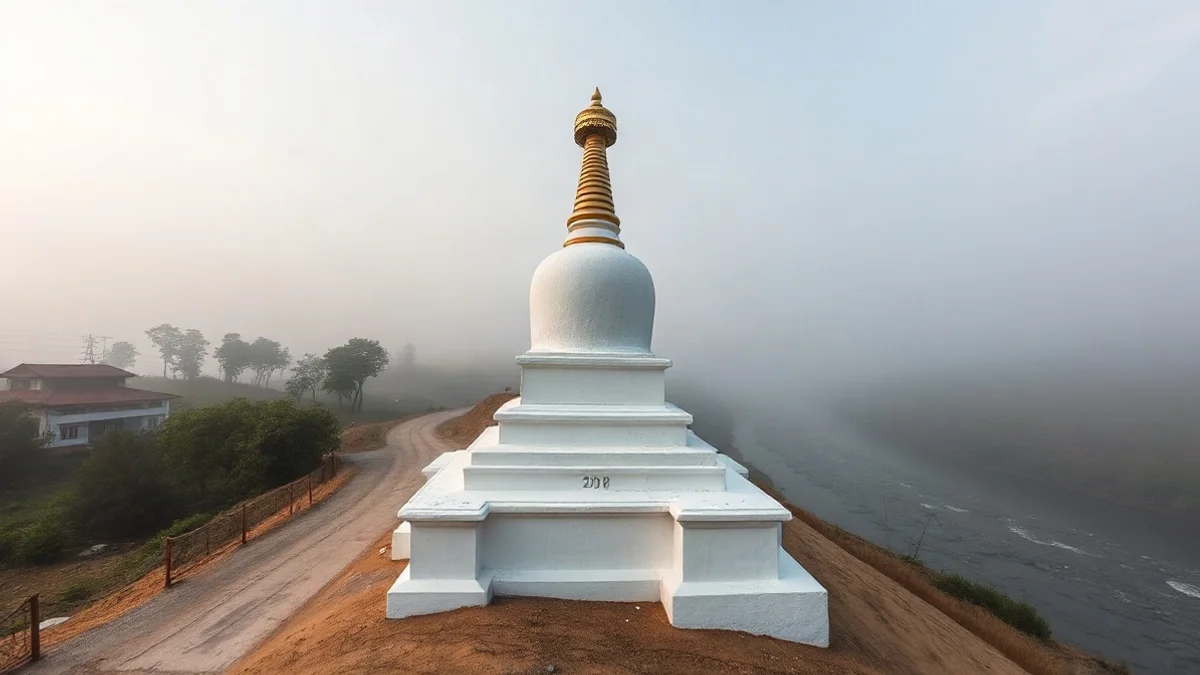
In the predawn darkness of southern Bhutan, along the border with India, an extraordinary architectural feat unfolded as 108 sacred Buddhist stupas were erected simultaneously within a single day. The mass construction drive in the town of Gelephu, witnessed by King Jigme Khesar Namgyel Wangchuck, members of the royal family, the prime minister, thousands of monks, and international guests, shattered records by completion in just nine hours.
The massive undertaking began at 3:00 AM on November 1st, a date marking a sacred Buddhist holiday celebrating the Buddha's descent from a heavenly realm. Months of meticulous preparation preceded the event, with foundations laid and pre-fabricated components positioned at 108 distinct sites spaced 108 meters apart. As dozens of traditional Buddhist trumpets pierced the night, 108 construction teams simultaneously hoisted and assembled the structures, transforming the landscape along the river into a 12-kilometer white avenue of 15-meter-tall stupas by midday.
A Royal Vision Rooted in Ancient Legend
The ambitious project, officially recognized by Guinness World Records two days later, was conceived by King Jigme Khesar Namgyel Wangchuck. Marking his 46th birthday in February, the monarch announced the "108 Project" to foster national unity and showcase the resilience of the Bhutanese people. The king personally inspected the terrain, joined volunteers in clearing dense vegetation, and oversaw preparations alongside local residents and international contributors.
The choice of the number 108 holds profound spiritual significance in Buddhism and Hinduism, appearing frequently in prayer beads and yoga traditions. Furthermore, the initiative mirrors an ancient legend from the seventh century, in which the King of Tibet erected 108 temples across the region in a single night to subdue a giant demoness and allow Buddhism to flourish. Two of those original temples still stand today in Bhutan at Paro and Bumthang.
Building the Mindful City of the Future
The record-breaking construction in Gelephu serves as an early cultural cornerstone for one of the most ambitious urban planning projects in the kingdom's history. In December 2023, the King announced the establishment of the Gelephu Mindfulness City, a futuristic urban center designed to integrate holistic economic development, cultural heritage, and environmental preservation.
Designed by the international architectural firm BIG, led by Danish architect Bjarke Ingels, the new city translates Bhutan's philosophy of Gross National Happiness into a contemporary framework. The master plan prioritizes low-rise buildings using local materials such as wood, bamboo, and stone, while incorporating ecological corridors for wildlife, a hydroelectric dam featuring a central Buddhist temple, and an international airport to establish Gelephu as a global economic hub.
Reflecting on the successful nine-hour construction feat, the monarch emphasized that the true triumph extends beyond the physical monuments themselves.
"The real achievement is not the structures, but what this project reveals about the spirit of the Bhutanese people, their values, their dedication, and their ability to unite and act for the future of their country."
Stacked vertically, the 108 stupas would reach a staggering height of 1,620 meters, nearly five times the height of the Eiffel Tower. Instead, stretching in a harmonious line along the southern riverbanks, the new shrines stand as a testament to engineering precision, ancient heritage, and visionary urban development.