How to Break the Bad Habit of Using Bedroom Chairs as Clothing Piles
Home organization experts explore why chairs become catch-all spots for clothes and bags, offering practical strategies to establish designated homes, simplify storage, and break clutter habits.
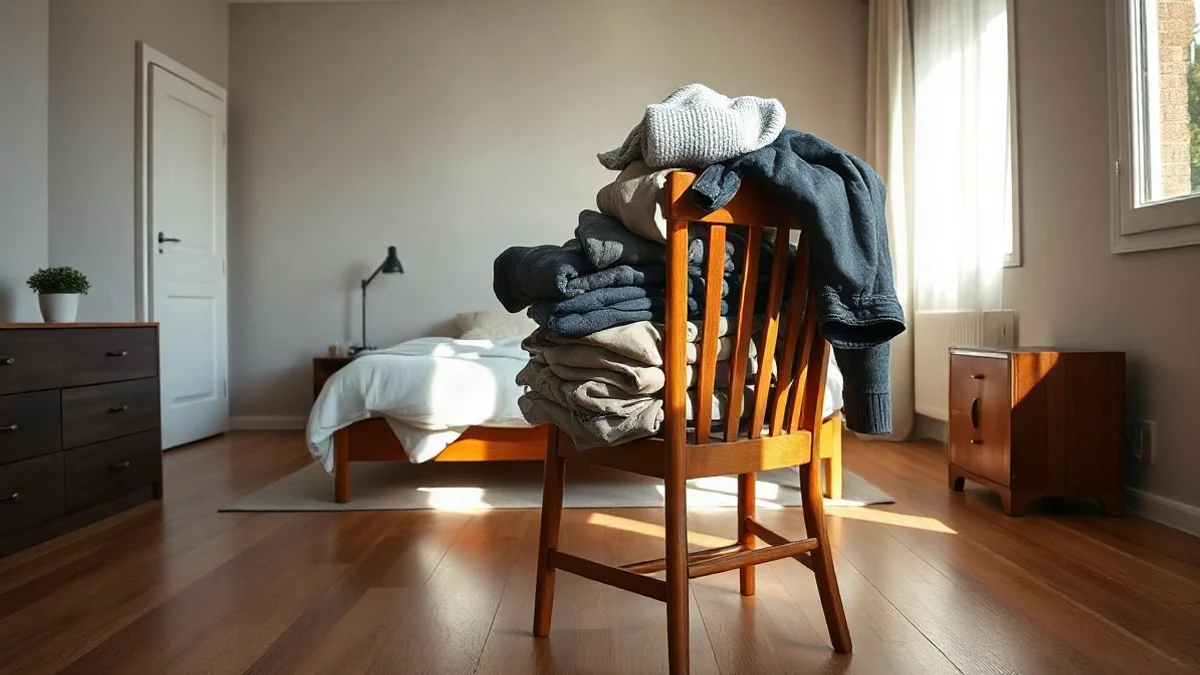
Many of us are familiar with the phenomenon: a chair in the bedroom, dining area, or near the entrance that stops serving its original purpose and becomes a catch-all for items without a clear home. A jacket worn upon returning home, a bag, trousers meant to be worn again, or clean laundry waiting to be folded all end up in the same spot, gradually forming a growing pile.
Home organization experts suggest looking beyond merely clearing the pile and addressing the root cause. If items repeatedly return to the same spot, it typically means they lack a designated home or the process of putting them away is overly cumbersome. To break this habit, the organizing process needs to be simplified and made more accessible.
Give Everything a Fixed Address
The first step is deciding where each item belongs when not in use. Coats can go to an entryway rack, bags to a designated shelf, and clean laundry directly into wardrobes or drawers. When items lack a defined spot, the chair becomes the most accessible option. It is also important to ensure the chosen location is genuinely convenient: if one has to move a stack of clothes just to store an item, the likelihood of doing so drops significantly.
Clear Space in Closets and Drawers
Sometimes the underlying issue is not a lack of discipline, but simply a lack of space. An overcrowded wardrobe, stubborn drawers, and packed shelves turn putting clothes away into a chore. Going through closet contents, removing unused items, and reorganizing shelves helps ensure items can be returned effortlessly without playing daily tetris.
Install Hooks and Baskets
If coats and bags consistently land on the same chair by the door, the ideal solution might be installing a rack nearby. Adding hooks for each family member, a basket for bags, or a designated shelf for everyday items prevents clutter. Similarly, the bedroom can benefit from a dedicated basket or hanging rail, provided it serves a specific purpose rather than acting as another dumping ground.
Establish a Designated Drop Zone
It is rarely realistic to expect every single item to find its permanent home instantly. Therefore, setting aside a small, defined zone for items requiring attention later—such as a basket for bags, a tray for keys, or a hook for coats—makes a significant difference. The key is maintaining a single dedicated spot rather than letting every flat surface in the home turn into a makeshift storage room.
Adapt Solutions to the Room
In the kitchen, kitchen islands and chairs frequently attract miscellaneous items brought in from outside. Designating an alternative drop zone or placing decorative items like a potted plant on surface areas serves as a visual reminder that the space is not meant for storage.
In the bedroom, a common dilemma involves clothes worn once that do not yet require washing. Instead of draping them over a chair, installing a dedicated hanging rail allows garments to air out between wears. For clean laundry that cannot be folded immediately, a separate designated basket prevents piles from forming on beds or chairs.
Set a Brief Routine for Resetting the Home
Rather than waiting for a pile to grow into an overwhelming task that requires an hour to clear, scheduling a short weekly reset allows family members to return their belongings to their proper places. Experts emphasize that responsibility should be shared among household members rather than falling on a single person.
Try Removing the Chair
While it may sound drastic, removing a problematic chair from the room for a period can effectively break the automatic habit of piling items. Without the surface available, alternative arrangements must be found, and the chair can be returned once the new routine is established.