Outgoing Health Director General Warns of Digital Exposure and Funding Risks
Outgoing Health Ministry Director General Moshe Bar Siman Tov reviewed key achievements and remaining challenges, warning that restricting children's social media use is vital.
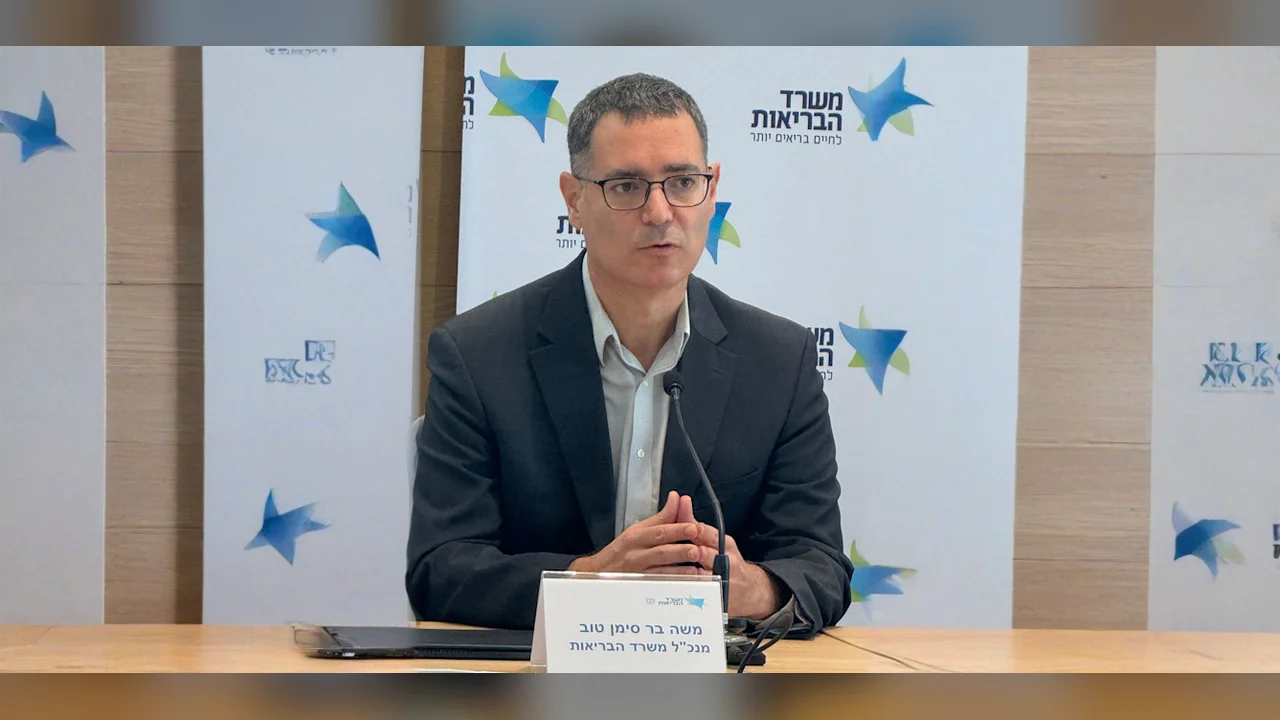
As outgoing Ministry of Health Director General Moshe Bar Siman Tov concludes his tenure, he has outlined the primary public health challenges facing Israel's medical infrastructure. In a briefing with journalists, Bar Siman Tov emphasized that while significant progress has been achieved across multiple domains, critical issues remain unaddressed.
Public Health and Children's Digital Exposure
Among the foremost challenges identified is the pervasive impact of digital media and smartphones on minors. Bar Siman Tov noted that while parental guidance has been issued, the next necessary regulatory steps involve restricting children's access to social media and limiting targeted advertising aimed at youth. Additional public health priorities include implementing childhood obesity intervention programs, supporting taxation on unhealthy foods and sugary beverages, and advancing comprehensive anti-smoking legislation alongside regulations on electronic cigarettes.
Infrastructure and systemic funding also remain central concerns. The outgoing director general warned against unmanaged growth in national health expenditures, which could shift financial burdens directly onto patients. Addressing structural risks, he voiced reservations regarding private capital influx into healthcare, stressing that hospital ownership structures should remain within public institutional frameworks.
Navigating Seven Years of Emergency Operations
Reflecting on his second tenure, which spanned the conclusion of the COVID-19 pandemic and three years of wartime operations, Bar Siman Tov characterized the period as seven continuous years of emergency management.
"We are finishing seven years of emergency and we do not expect stability ahead. The working assumption is that the system must continue to be prepared for emergency events," Bar Siman Tov stated.
Despite chronic emergency pressures affecting mental health, rehabilitation, and pediatric development, the healthcare system maintained high public trust levels, reaching 87 percent approval, underpinned by demographic diversity and cross-sector cooperation.
Workforce Reforms and Medical Training
To secure adequate professional staffing, the ministry advanced medical education reforms, including the Yatziv reform. These measures restrict foreign medical institutions lacking recognized standards from qualifying graduates for Israeli licenses while expanding domestic training capacity. Consequently, Israel is projected to align its physician-to-population ratio with OECD averages by 2035, ensuring that more than half of all medical students complete their training domestically.
Other key milestones highlighted during the tenure include the commencement of the Peres University Medical Center construction in the Negev, the integration process between psychiatric and general hospitals, and the expansion of the national mental health reform. Furthermore, civil-military medical cooperation during wartime contributed to a marked reduction in combat casualty mortality rates, while hospital fortification investments aim to protect 70 to 75 percent of beds within three to five years.
Controversies and Innovation
Addressing criticism surrounding recent reforms in pediatric developmental services, Bar Siman Tov defended the transition from partial reimbursement models to organized service agreements. He argued that reimbursement systems drain public resources and create economic barriers for vulnerable populations, whereas the new framework increases treatment accessibility within public facilities.
In the field of medical innovation, the ministry initiated the creation of a unified national clinical record repository to consolidate patient data across hospitals and HMOs, optimizing appointment scheduling and clinical research. Internationally, the Israeli healthcare sector has leveraged its extensive mass-casualty response experience from October 7 to educate foreign delegations, securing the system's global relevance even among nations with complex diplomatic relations.