Mild Winter Triggers Unusual Surge of Bee Swarms Across Auckland Streets
Auckland faces an unusual surge of large bee swarms invading city streets following an exceptionally mild winter, prompting numerous calls to local beekeepers.
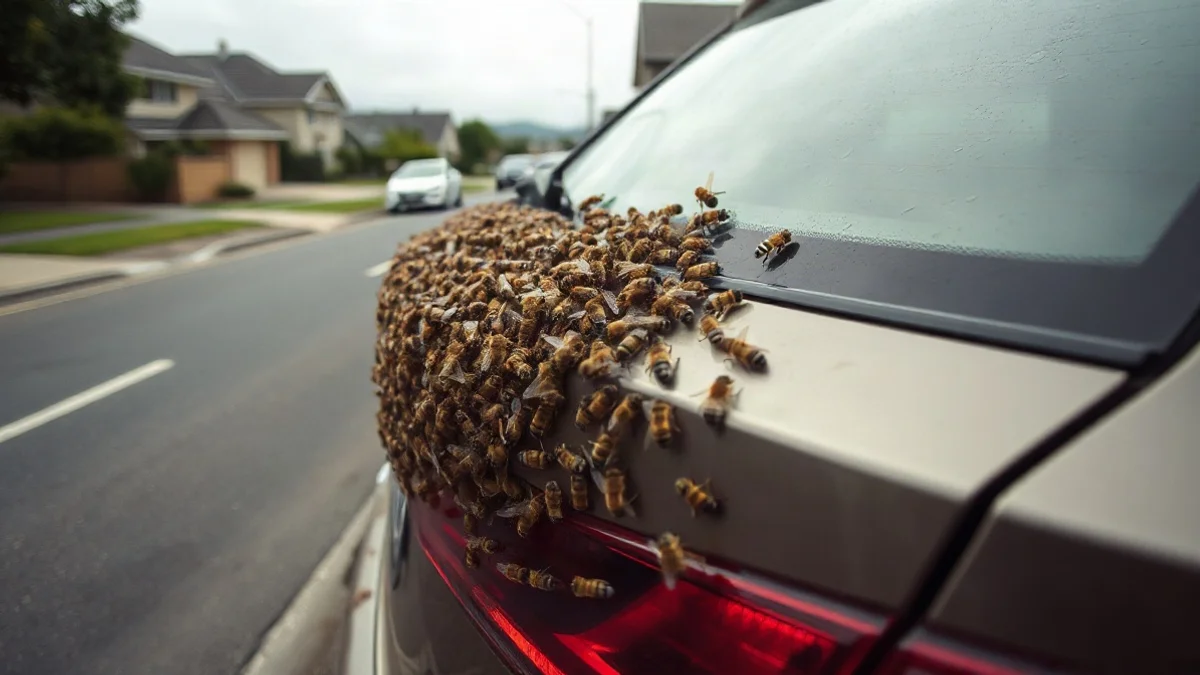
Auckland is experiencing an unusual surge in bee swarms this season, with thousands of insects taking over streets, resting on parked cars, and covering road signs. Experts attribute the phenomenon to an unusually mild winter that accelerated colony growth.
The Auckland Beekeepers Association reports receiving between five and ten calls daily from residents requesting assistance to remove swarms, a notable increase compared to previous years. At least 100 callouts have been handled so far, reflecting an earlier and larger migration pattern.
Unusual Encounters in the City
Brian Lang, who manages swarm collection for the association, noted that members frequently receive direct requests from citizens. In one notable incident in October, a swarm covered the rear of a parked car in the Birkenhead neighborhood for about two hours. Remarkably, a woman was sitting inside the vehicle the entire time and remained completely unaware of the buzzing crowd outside, according to Lang.
Bees typically swarm in spring and early summer when a hive outgrows its capacity. A portion of the colony leaves to find a new home, temporarily resting while scout bees search for a permanent location. However, beekeepers view swarming as a loss of roughly two thirds of their workforce right before the honey production season.
Climate Impact on Bee Activity
Ken Brown, president of the association, explained that while swarms go unnoticed in rural areas, urban residents often panic upon encountering thousands of flying insects. Despite their intimidating appearance, swarms are generally docile because the bees are focused on finding a new shelter rather than defending a hive.
Data from Earth Sciences NZ indicates that New Zealand experienced its third-warmest winter on record, triggering early swarming similar to trends observed in North America. Milder winter temperatures allowed colonies to rear more brood successfully, resulting in stronger populations reaching the swarming stage ahead of schedule.
Professor Phil Lester, an entomologist and ecologist at Victoria University, suggested the phenomenon carries positive indicators. The abundant swarms demonstrate that bee colonies managed to multiply and expand their populations earlier than usual, pointing to a robust year for the insect population.