Monumental 2,600-Year-Old Assyrian Stele Discovered in Nineveh
Archaeologists in Iraq have uncovered a monumental 2,600-year-old Assyrian marble stele in Nineveh, featuring rare reliefs of three kings and cuneiform inscriptions.
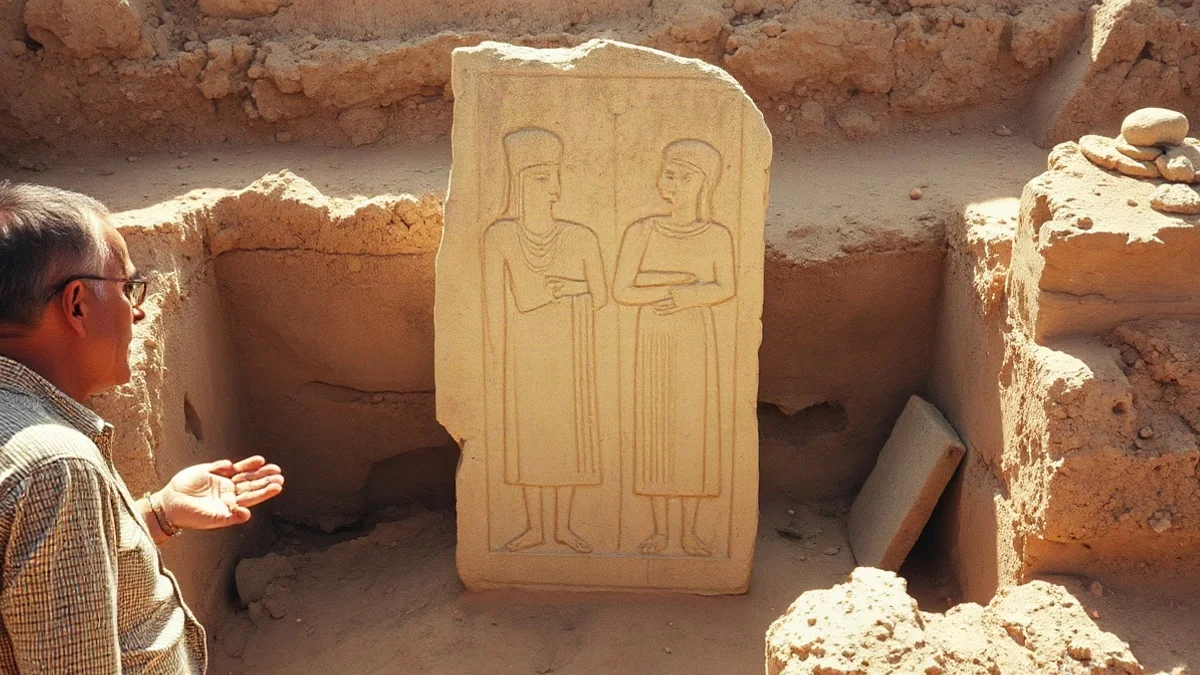
An exceptional archaeological discovery has been unearthed in the ancient city of Nineveh, Iraq: a monumental Assyrian marble stele standing over two meters tall, dating back to the 7th century BCE—approximately 2,600 years ago. The artifact was discovered during joint excavations conducted by a team of researchers from Iraq and the University of Chicago, near the Shamash Gate in the eastern wall of the ancient city in the Mosul region.
Royal Reliefs and Historical Significance
According to preliminary assessments by the Iraqi State Board of Antiquities, the monument documents engineering projects and construction works initiated by King Ashurbanipal, one of the most prominent and powerful rulers in Assyrian history. The front of the stele features a prominent relief of King Ashurbanipal, who ruled Assyria from 668 to 631 BCE. Unlike standard steles, the reverse side bears reliefs of two additional Assyrian kings, bringing the total to three rulers depicted on a single monument.
"This extraordinary find provides direct insight into royal display methods and how the ruler sought to shape his historical memory within the capital of his empire," noted one of the researchers.
Cuneiform Inscriptions and Regional Context
An extensive cuneiform inscription is carved across the stone. Although researchers have not yet completed its full translation, prevailing estimates suggest the text details the construction projects undertaken by Ashurbanipal in Nineveh. Placed near the central Shamash Gate, the monument underscores the strategic importance of the location, just decades before the dramatic fall of the empire in 612 BCE to a coalition of Babylonians and Medes.
During this pivotal era of Assyrian collapse, the Kingdom of Judah underwent profound transformations. King Josiah capitalized on Assyria's decline to initiate sweeping religious reforms and expand his borders. However, the power vacuum left behind soon paved the way for the rise of the Babylonian Empire under Nebuchadnezzar, culminating years later in the destruction of Jerusalem and the First Temple.