Antique Moroccan Hanukkiot Reveal Centuries of Heritage and Artistry
Discover rare Moroccan hanukkiot dating back to the 18th century at a new Jerusalem exhibition, revealing unique regional craftsmanship, hidden symbolism, and Zionist roots.
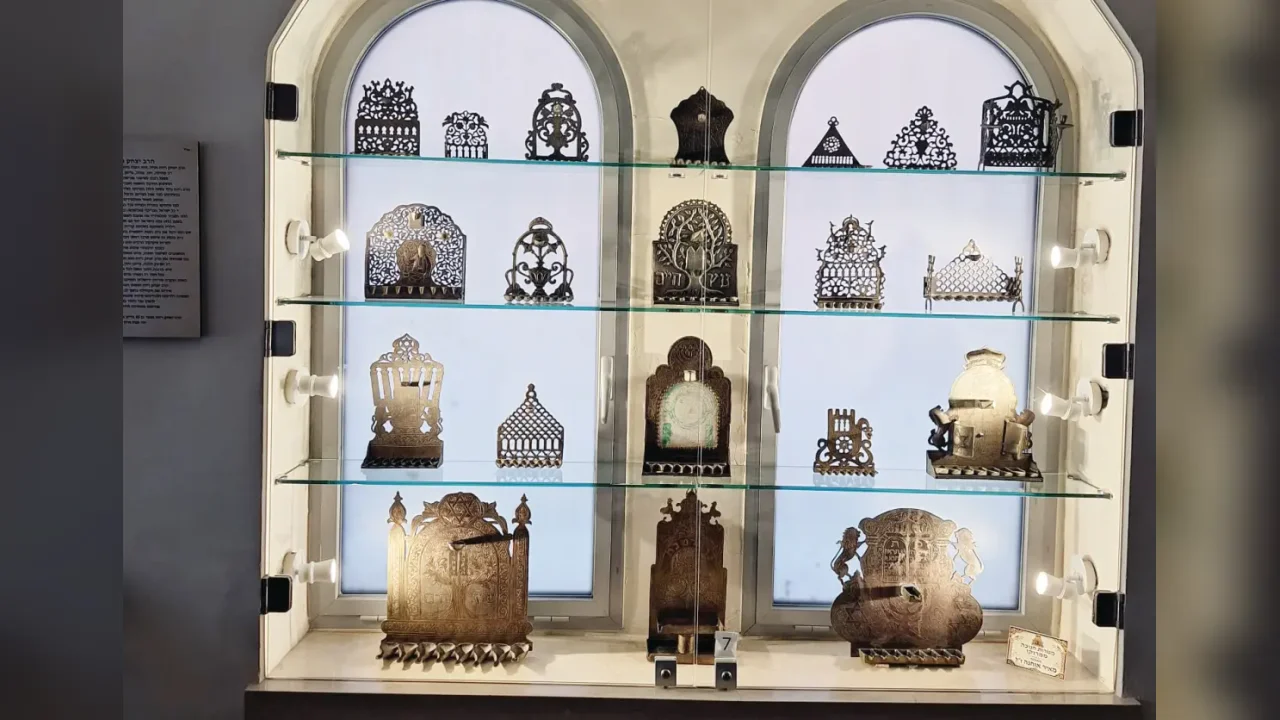
Nearly 50 handcrafted antique hanukkiot, predominantly originating from Morocco, illuminate the new exhibition "Copper and Light in Jerusalem" at the World Center for North African Jewry Heritage in Jerusalem. Dating from the 18th, 19th, and early 20th centuries, these ritual objects shed light on how Moroccan Jews celebrated Hanukkah while showcasing distinct regional and urban artistic styles.
Preserving Heritage Through Private Collections
"For Moroccan Jews, the simple hanukkiah was an everyday utility object rather than a museum piece," explains Chaim Avikzar, the center's director and exhibition initiator. "If it broke or wore out, the metal was simply melted down and recast without hesitation." Avikzar notes that foreign collectors such as Zidek Shulman and William Gross, owner of the world's largest hanukkiah collection, recognized the historical and artistic value of these pieces during the 1950s, embarking on extensive acquisition campaigns that preserved entire collections.
Professionally, these ritual lamps are formally known as Hanukkah lamps, as the modern Hebrew term "hanukkiah" was coined later by Hemda Ben-Yehuda. The exhibition features a private collection of some 20 hanukkiot amassed over decades by the late Meir Ohana, a member of an artistic family and brother of renowned artist Pnina Barkai. Following his passing, his brother gathered the exquisite pieces from family members to display them in the exhibition, located at 13 HaMa'aravim Street in Jerusalem.
Unique Engineering and Historical Artifacts
Among the standout items is an 18th-century piece from Fes, representing the city's celebrated silversmithing tradition. It features three concealed human figures associated with protective home amulets and a hamsa-like motif, designed to safeguard Jewish households during turbulent periods. Another rare artifact from Rissani near the Sahara Desert, also dating to the 18th century, displays surprising Italian design influences that migrated from Rome and endured for centuries.
The exhibition also presents an unconventional two-tiered hanukkiah featuring four square oil receptacles instead of eight separate ones, designed to save space by accommodating two wicks per basin for two days each. Additionally, a poignant early 20th-century piece crafted by a young man in Marrakech incorporates the likeness of Rabbi Amram Ben Diwan, an 18th-century Jerusalem-born sage revered deeply in Moroccan Jewish tradition—a rare portrait inclusion for such ceremonial art.
The Hidden Message of the Bird Motifs
Perhaps the most emotionally resonant items in the collection are hanukkiot adorned with rooftop bird motifs, accompanied by a verse from Psalms: "Even the sparrow has found a home, and the swallow a nest for herself."
"This is a poignant plea from the diaspora to the Almighty: even a bird has a home and its own nest, while only we, the exiled people of Israel, have no home and no place of our own, and we await Your return to the Land of Israel," Avikzar reflects. "These hanukkiot were created in the diaspora out of a yearning for the land, and today they are here with us, free in Israel."
The exhibition concludes chronologically with a 1920s hanukkiah featuring a Star of David structure, reflecting the rising Zionist sentiments of the era as the symbol gained widespread prominence across Jewish communities.