Amot Reports Moderate Growth as ToHa2 Leasing Advances Toward 2027 Target
Amot Investments reports moderate growth and steady progress at its ToHa2 tower project in Tel Aviv, alongside plans to expand its retail real estate footprint to reduce reliance on the office sector.
Amot Investments reports steady leasing progress at the ToHa2 skyscraper in Tel Aviv, alongside rising demand for office space in secondary and tertiary rings outside the city. Meanwhile, the real estate firm is seeking to expand its retail portfolio—focusing on open-air shopping centers—to reduce its heavy reliance on the office market. Until ToHa2 is fully occupied and its retail assets expand, Amot's overall growth remains moderate, mirroring the slow pace of recent quarters.
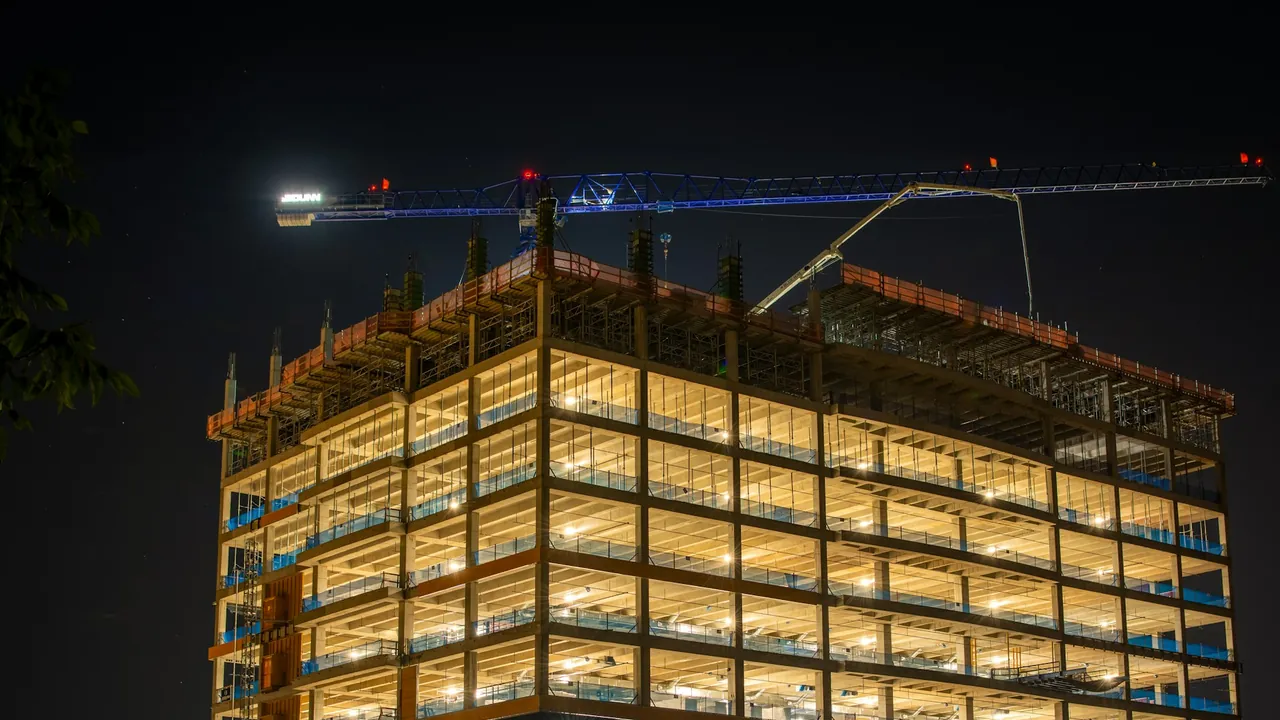
Managed by Shimon Avodraham, Amot holds a 50% stake in the 78-story ToHa2 tower located on Yigal Alon Street near the Tel Aviv Hashalom railway station, offering 154,000 square meters of rentable space. Construction is set to conclude in the coming weeks, with initial occupancy slated for the upcoming year. Last week, Amot and its partner Gav-Yam—which holds the remaining 50%—signed two major lease agreements totaling 25,000 square meters in the tower: one with American cloud software giant Salesforce and another with flexible workspace provider WeWork. These deals bring the project's pre-leasing rate to 62%.
Amot's share of annual revenues from these signed spaces is projected to reach 96 million shekels, compared to a full-occupancy estimate of 155 million to 160 million shekels. Both companies are currently in advanced negotiations to lease an additional 13% of the project. Furthermore, local media reports indicate that Google, the anchor tenant in the tower, is looking to expand its leased footprint by approximately 5,500 square meters. In 2024, Google signed an agreement to lease 60,000 square meters in the project, accounting for about 38% of its total office space.
During an investor earnings call, Avodraham estimated that, based on current leasing momentum and robust demand, the entire tower will be fully leased throughout 2027. He noted that despite several competing projects in the area, staggered completion dates ensure that available supply cannot keep pace with demand. Consequently, he does not foresee a price drop in the near term, projecting that shell-condition rental rates in the area will hold steady at around 150 shekels per square meter. Amot itself plans to develop two additional projects nearby: Beit Amot Raviv, spanning 65,000 square meters, and ToHa3, featuring 200,000 square meters of office space where Amot holds a 50% stake. Construction on ToHa3 is expected to commence in the coming months, with preliminary interest already registered from a prospective anchor tenant.
Financial Results and Portfolio Performance
Amot reported net operating income (NOI) of 268 million shekels for the quarter. Of that total, 265 million shekels came from same-property assets leased throughout both the current and corresponding previous quarters. NOI from these identical properties edged up by just 1% year-over-year, continuing a modest growth trajectory of 1% to 3% recorded in 2025 and the preceding two quarters. Overall NOI growth was weighed down by recent asset disposals, which trimmed incoming revenues, as well as low occupancy rates at the Amot Holon campus. Avodraham estimates that occupancy at the Holon project will soon reach 70%, even though construction concluded back in 2022. The campus encompasses 47,000 square meters of office space.
Amot continues to face leasing challenges at its office project in the Lehi complex in Bnei Brak, where it completed 87,000 square meters of space, holding a 50% share. Avodraham told investors that the company has begun marketing smaller spaces spanning a few hundred square meters rather than large blocks, resulting in a recent uptick in demand and inquiries. He observed that secondary and tertiary rings outside Tel Aviv—such as Holon and Bnei Brak—are seeing increased interest from tenants seeking to upgrade their offices and relocate to modern buildings in the same districts.
Strategic Shifts and Market Outlook
Offices remain Amot's core operating segment, accounting for 45% of net operating income during the quarter. Logistics and industrial assets contributed 29%, retail properties accounted for 18%, and supermarkets added 5%. Amot aims to broaden its retail footprint and is evaluating the acquisition of open-air shopping centers, with potential ground-up development to follow. Its relatively small footprint in retail has historically weakened its bargaining power against major tenant groups. Expanding in this sector—a primary growth engine for peers like Azrieli Group, Melisronic, and Big Shopping Centers—will enable Amot to diversify away from the office market, which has faced headwinds in recent years.
Avodraham confirmed during the call that the company is also exploring entry into the residential market through corporate acquisitions. Amot maintained its net operating income forecast, previously downgraded last quarter, within a range of 1.07 billion to 1.8 billion shekels. However, it lowered the upper bound of its net cash flow projection (FFO) to 790 million shekels, down from 800 million shekels previously, following a downward revision in the consumer price index inflation forecast to 1.7%, compared to 2% in earlier estimates.
Amot, which boasts a market capitalization of 9.3 billion shekels, will distribute a dividend of 133 million shekels later this month. Its heavy exposure to the office sector and sluggish recent growth are reflected in its stock performance, which has fallen 21% since the beginning of the year, compared to a 9% decline in the Tel Aviv-Yielding Real Estate Index. In contrast, shares of partner Gav-Yam—which began occupying newly completed projects and generating revenue over the past year—have dropped by just 1% over the same period.