Battle for Ali-Taher Ridge: Why Israel Must Destroy Hezbollah Stronghold
The battle for the strategic Ali-Taher ridge in southern Lebanon forces Hezbollah into a critical dilemma. Military expert Zvika Haimovich analyzes why the IDF must completely dismantle this stronghold.
The battle for the Ali-Taher ridge in southern Lebanon has recently become much more than a mere geographical point. It has emerged as a symbol of a broader struggle over the future of Hezbollah, its ability to maintain its military infrastructure, and whether the organization can still dictate the rules of the game in southern Lebanon and the country as a whole. Added to this is an attempt to draw Iran into the confrontation over the ridge.
The Strategic Value of the Ridge
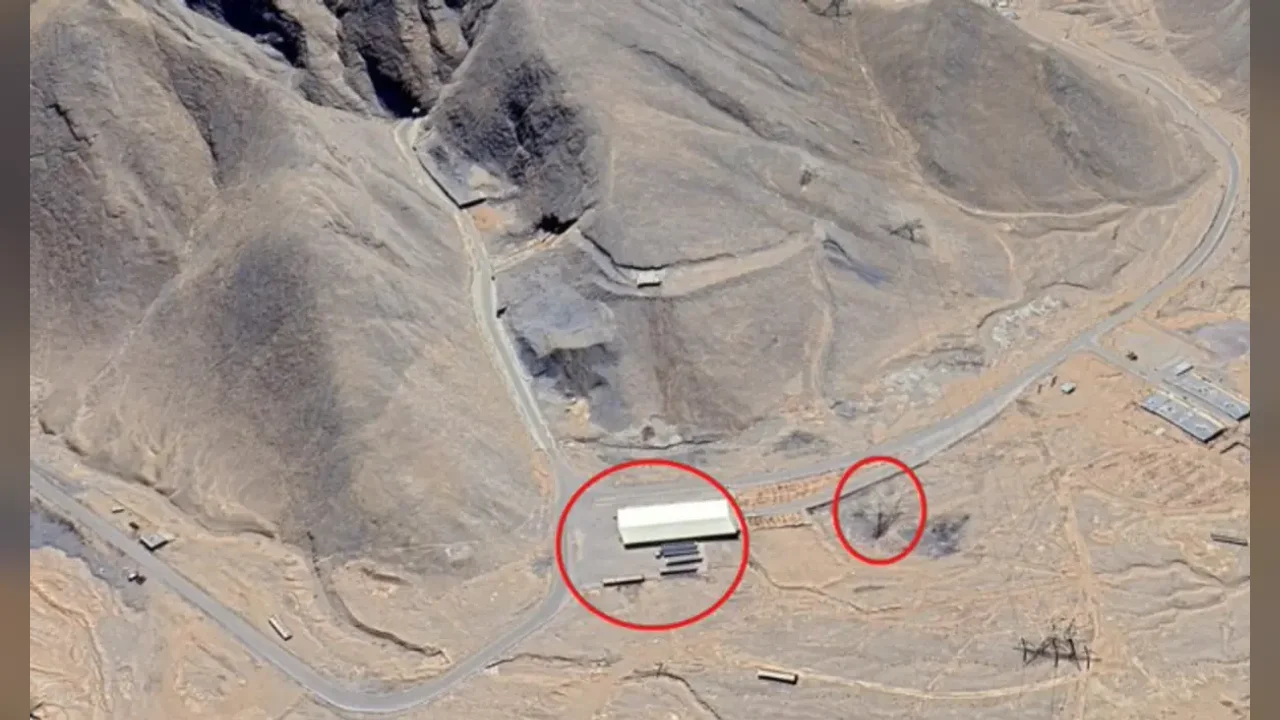
The importance of the ridge stems primarily from its topographical location, situated in close proximity to the Beaufort Castle and the regional hub of Nabatiyeh. It overlooks vast areas of southern Lebanon, granting a significant military advantage to whoever holds it.
Over the past twenty years, Hezbollah has established a massive underground infrastructure here, ranging from the storage of what it considers game-changing weaponry to serving as a covert staging ground for forces preparing to attack Israel. Therefore, the campaign around the ridge is not a battle over a mere hill, but a deliberate effort to strike at one of the gravity centers of Hezbollah's military alignment. Stripping the group of this asset deprives it of a critical component of its operational doctrine.
If Hezbollah loses its ability to hold strategic spaces south of the Litani River, it will have to decide whether to keep fighting for every single foothold at the cost of further attrition, or to adapt to a new reality in which the Lebanese Army and international actors demand that it gradually relinquish all military infrastructure in southern Lebanon.
Hezbollah's Dilemma
Hezbollah's dilemma is a choice between equally poor alternatives:
-
Withdrawal: Retreating or conceding such a significant strategic asset could be interpreted within Lebanon and by Hezbollah's supporters as an admission of defeat.
-
Persistence: Insisting on maintaining a military grip on southern Lebanon is likely to lead to continued confrontation with Israel, further destruction of the group's infrastructure, and mounting pressure from the Lebanese state and the international community.
The struggle over the Ali-Taher ridge coincides with diplomatic efforts to promote a broader settlement, under which Hezbollah would be required to disarm and hand over control of certain areas to the Lebanese state. Iran also understands the gravity of the situation, hence the messages it conveyed through the United States regarding a potential significant response to ongoing IDF operations in the area.
Despite various media reports, it is highly uncertain whether Iranian personnel were actually present at the site. However, the fact that the compound is currently abandoned allows Israel to dismantle a major infrastructure hub while keeping Hezbollah cornered in its dilemma.
The Opportunity Outweighs the Risk
In parallel to the crossroads faced by Hezbollah and its Iranian patron, Israel must also make a decisive move. Any hesitation in demolishing the infrastructure across the entire ridge could be perceived as foot-dragging caused by Iranian deterrence, potentially leading to international pressure and a withdrawal before the mission is fully accomplished.
The challenge lies in ensuring that stripping Hezbollah of this strategic asset does not trigger a wider regional escalation at a highly sensitive time, amid the Jewish High Holidays and political transitions.
Israel must not be deterred from completely destroying the infrastructure on the ridge. This is a non-recurring opportunity to cement the strategic shift Hezbollah is undergoing and to severely damage its assets south of the Litani. The potential gain far outweighs the risk. If the loss of the Ali-Taher ridge becomes the starting point for a broader relinquishment of military infrastructure in southern Lebanon, this ridge may well be remembered as the place where Hezbollah's strategic decline and disarmament began.