Airlines Petition Supreme Court Over 'Roar of the Lion' Flight Cancelations
Foreign and El Al airlines petitioned the Supreme Court to be exempt from passenger compensation for flights canceled during the 40-day airspace closure of the "Roar of the Lion" operation.
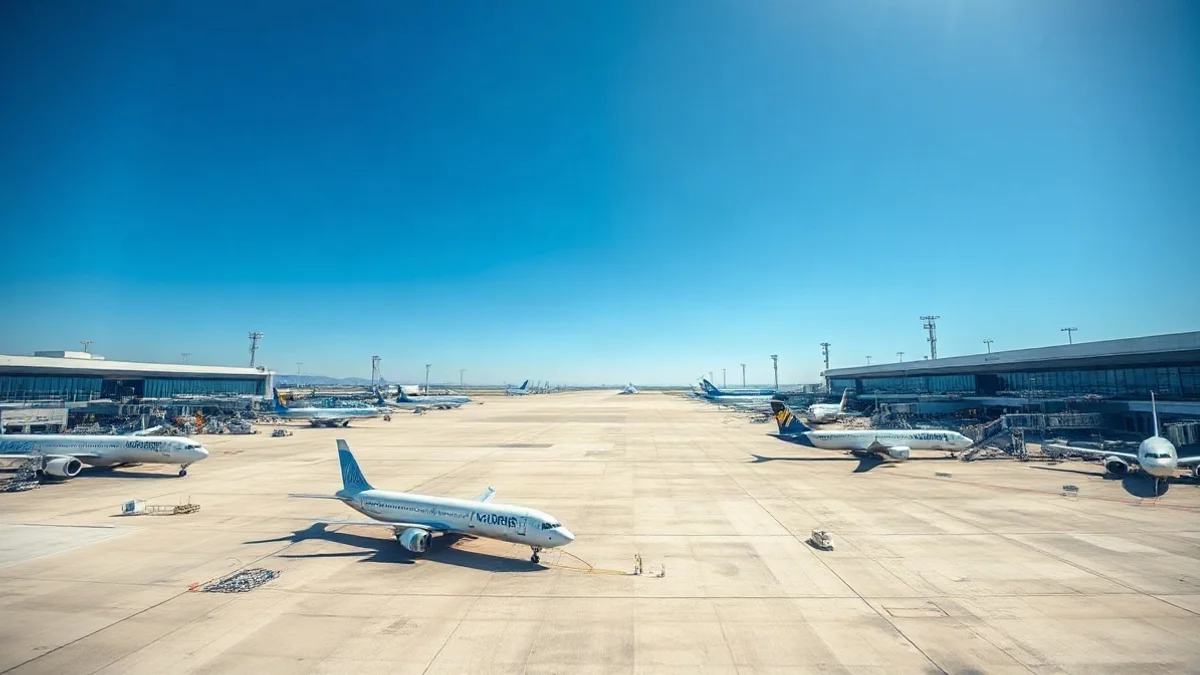
Foreign airlines and El Al have filed a petition with the Supreme Court asking to be exempt from paying passenger expenses for flights canceled during the "Roar of the Lion" operation. The companies are requesting an urgent hearing on the matter, which they describe as a "petition raising a complex and urgent legal question, with immediate and extremely significant implications for the aviation industry."
In December 2025, a similar petition was filed regarding the closure of the skies during the "With All a Lion" operation, and a hearing on that procedure is scheduled to take place next March. Apparently, the two petitions will be consolidated.
This time, unlike the previous petition, it is not a matter of 12 days when the skies were closed, but a period of 40 days. The demand is that the court compel Minister of Transport Miri Regev to explain why she did not exercise the authority given to her in the amendment to the Aviation Services Law and set a time limit for the payment of passenger expenses by the airlines. It is argued that the airlines should be fully exempted from liability to pay passenger expenses.
This involves compensation obligations for the costs of accommodation, food, drink, and transportation that Israelis were forced to pay out of pocket until they were able to fly back to the country when the airspace was closed to flights. The petition was filed by attorneys Shirley Katsir, Amir Varon, Lior Leinhard, and Shmuel Halevi from the FBC law firm.
"The ability to provide an alternative to passengers was denied"
The airlines filing the petition explain that, unlike the "With All a Lion" operation, in March 2026 the public knew that there was a possibility of a military operation, and despite this, people chose to fly.
The foreign airlines, for example, resumed their flights to Israel following the state's call to renew international aviation to the country, in order to increase the supply of flights, lower their prices, and allow Israeli citizens availability of seats on flights.
With the amendment of the law, it was determined that the obligation to provide assistance services applies in cases where the airline can offer an alternative flight. Until the date of the alternative flight, the assistance is intended to provide a response to passengers who are forced to wait a short time, and to finance their hotel and stay expenses.
However, in this case, the airlines argue, it is not a matter of waiting but of continuous uncertainty. "This is the longest period in the history of the State of Israel in which Israel's airspace remained closed to the operation of regular commercial flights. Under these circumstances, airlines were forced not to operate their flights to Israel and were denied any practical ability to provide an alternative to passengers without any indication as to the date when their return to activity in Israel would be possible," the petition states.
"There can be no dispute that the responsibility for shutting down activity at Ben Gurion Airport lies with the State of Israel. There is no logic or justification in placing the economic and practical damage on the shoulders of the airlines." Alternatively, a remedy of limiting the compensation obligation to two nights only was requested.
What is the damage?
"The airlines themselves suffered and bore very heavy damages," as detailed in the petition. "Including the complete cessation of activity on routes to and from Israel, widespread disruption of international flight obligations, operational damages, complaints, and lawsuits from passengers... all due to the state's decision to close the airspace."
Information provided to Globes shows that the damage caused to the airlines as a whole following the closure of the skies during the "Roar of the Lion" operation is estimated at 1 billion shekels ($380 million). El Al alone reported a damage of $150 million. If airlines are forced to pay and bear these damages, the foreign airlines among them warn that they will no longer want to fly to Israel, and the consumer will be the one who suffers.
During the "Roar of the Lion" operation, about 40,000 takeoffs were canceled, according to estimates about 100 flights a day. These triggered a wave of lawsuits: dozens of class action proceedings and thousands of lawsuits are underway in Magistrate's Courts and Small Claims Courts.
"As long as the question of whether the obligation of assistance services also applies in a situation of prolonged airspace closure is not resolved, the petitioners are exposed to a huge scope of lawsuits, including class action proceedings in which the filers ask to charge them with astronomical sums," the petition states. "Section 9A of the Aviation Services Law amended as part of Amendment No. 2 was intended to render new legislative procedures unnecessary in any emergency situation and to provide the Minister of Transport with a quick, defined, and controlled mechanism to adapt the burden regime to exceptional circumstances. Despite this, following the 'Roar of the Lion' operation, no legislative adaptation was made and the Minister of Transport did not exercise the powers granted to her," they added.