Airlines Expand Premium Cabins and Trim Economy Seats to Boost Revenues
Global airlines are investing billions to expand business and premium cabins while cutting economy seating, a shift driven by strong demand and rising operating costs.
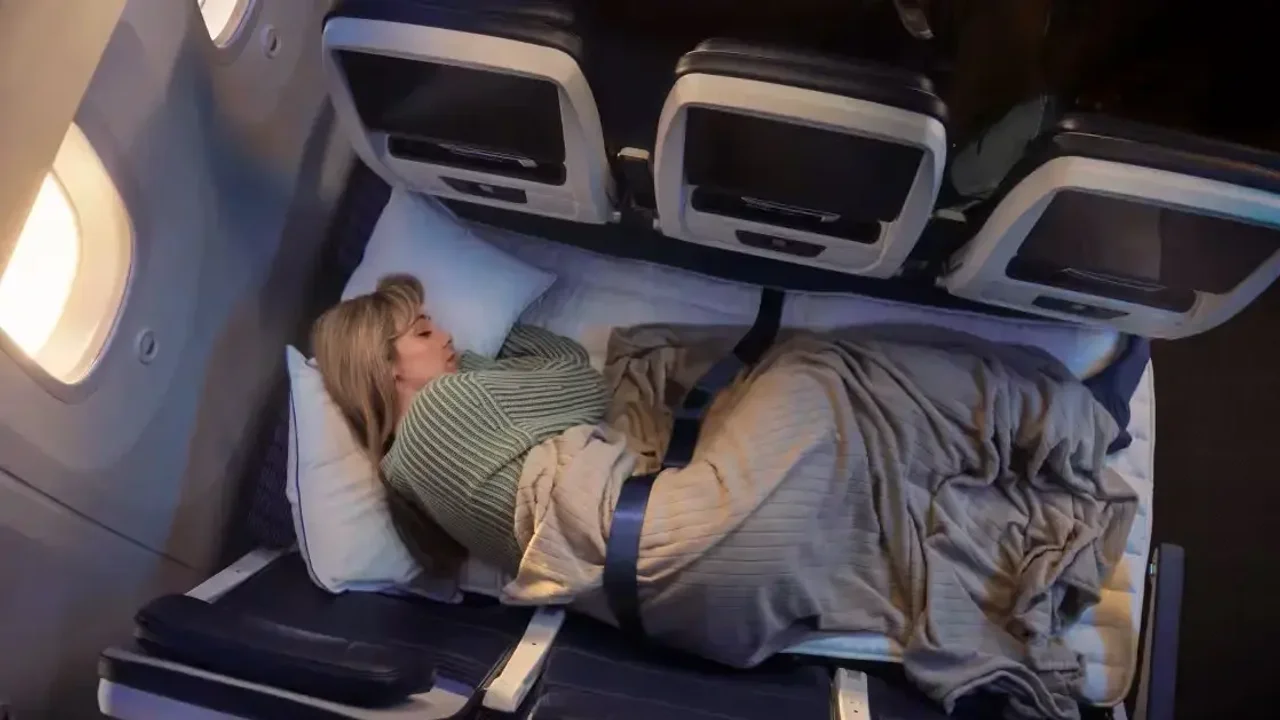
Global aviation is undergoing a structural shift, moving away from pure low-cost volume models toward premium and business-class services. Major airlines worldwide are investing billions of dollars to overhaul cabin layouts, reduce economy seating, and capture higher revenues per passenger amid rising operational costs.
Billion-Dollar Overhauls and Premium Expansion
Singapore Airlines announced an investment of more than 2 billion Singapore dollars, equivalent to approximately 1.6 billion US dollars, to develop a new generation of cabin seating across all classes, entering service in the second half of 2027. British Airways unveiled a 7 billion pound customer investment plan, designating the upper deck of its Airbus A380 wide-body fleet entirely for business class. This reconfiguration increases business-class seats from 97 to 106, while cutting total aircraft capacity from 469 to 417 seats. Economy seating on these aircraft will drop by roughly 30% to 215 seats, as carriers bank on premium yields to offset reduced capacity.
Virgin Atlantic is similarly expanding its premium footprint, targeting a 30% increase in premium seating over four years. On its Boeing 787 Dreamliner aircraft, business-class capacity will rise from 31 to 44 seats, featuring specialized suites, while premium economy seats will expand from 35 to 56. United Airlines and Delta have significantly scaled up their premium offerings, with United more than doubling its premium capacity since 2015. American Airlines reported an 18.5% increase in passenger unit revenue for premium products in the third quarter compared to the previous year, with premium offerings generating roughly half of ticket revenues despite accounting for about 30% of seats.
The Decline of First Class and Shift to Business
While business and premium classes experience strong growth, traditional First Class is gradually disappearing from many international carriers. Industry experts note that First Class occupies excessive space, requires high crew-to-passenger ratios, and frequently operates with empty seats. Aviation specialists explain that carriers can deliver upgraded business-class products that satisfy luxury demands while offering superior profitability.
Carriers including United, Delta, and American Airlines have phased out first-class cabins on international routes in favor of upgraded business suites with flat-bed seats and privacy doors. In Israel, El Al Israel Airlines discontinued its first-class service years ago, focusing instead on business and premium cabins. Nevertheless, ultra-luxury first-class suites remain active among Persian Gulf carriers such as Emirates Airline, which compete fiercely for high-end travelers on regional and global routes.
Impact on Fares and Economy Travelers
This strategic pivot coincides with severe economic headwinds for the airline industry, including rising jet fuel expenses driven by regional tensions with Iran. Lufthansa warned of potential double-digit fare increases in the coming year, though airline executives express confidence that high-end demand remains resilient. Business travelers are generally considered less price-sensitive to moderate fare hikes of 5% or 6%.
Industry analysts warn that the expansion of premium cabins will likely reduce the availability of budget seats and push overall ticket prices upward. El Al Israel Airlines recently introduced service enhancements in its premium cabin, featuring partnerships with Jo Malone London and TAKEANAP, reflecting strong domestic demand for upgraded travel. Ultimately, the industry-wide transformation aims to maximize profitability by segmenting aircraft cabins and catering directly to passengers willing to pay higher fares for enhanced comfort and privacy.