Airlines Urge Governments to Curb Jet Fuel Costs and Green Mandates
The Association of Asia Pacific Airlines warned that soaring jet fuel costs and green mandates threaten carriers, risking higher ticket prices and stalled tourism growth.
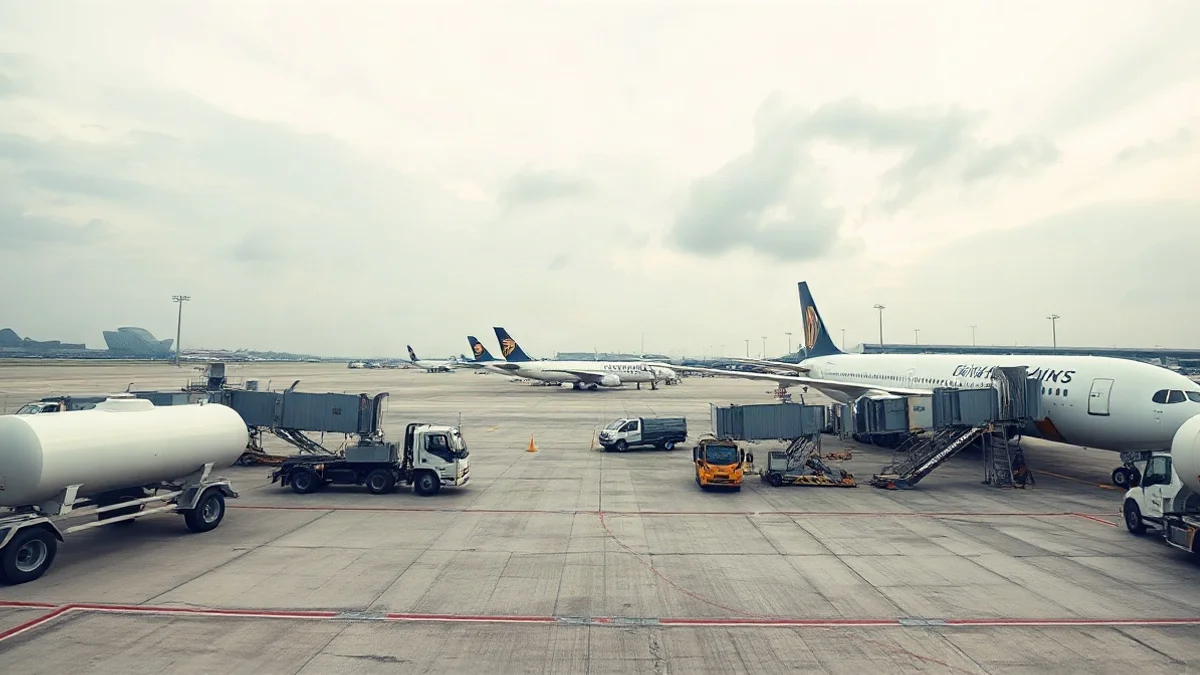
The global aviation industry, which has managed to recover and post strong demand in recent years, is now facing a complex and threatening economic front: the jet fuel cost crisis.
This week, the Association of Asia Pacific Airlines (AAPA) joined the chorus of concern, issuing an unusual warning and calling on governments to carefully review their taxation and energy policies toward the sector.
Jet fuel is the most volatile and heaviest component in airlines' expenditure balance sheets, currently accounting for between 25% and 35% of their total operating costs. In the Asia-Pacific region, characterized by long-haul flights crossing continents and oceans, sensitivity to fuel prices is particularly high.
In its statement, the association emphasized that the combination of crude oil price volatility, high refining margins, and the depreciation of local currencies against the US dollar creates a heavy financial burden on carriers. According to senior organization officials, without government attention, airlines' already thin profit margins could be completely eroded.
Beyond normal market fluctuations, the central point of tension between airlines and governments concerns the transition to Sustainable Aviation Fuel (SAF), which is the industry's primary tool for reducing carbon emissions. AAPA warns of a dangerous gap between regulatory intent and battlefield reality. The cost of sustainable fuel is currently two to five times higher than traditional jet fuel, and existing production infrastructures are insufficient to meet ambitious government targets.
The association warns that if governments choose the path of sticks—imposing mandatory quotas for SAF use and penalties for non-compliance—instead of carrots in the form of subsidies and producer incentives, the immense costs will inevitably be passed on to airline ticket prices.
Another point raised by the association is the tendency of some governments to view the aviation industry as a source for increasing state revenues through taxes, carbon levies, and passenger fees. AAPA reminds that international aviation treaties establish clear principles to prevent double taxation on fuel for international flights, and demands that governments respect this.
For Asia-Pacific nations, aviation is not a luxury but an economic lifeline. Higher flight prices or route cancellations due to economic unviability could severely harm inbound tourism, drive up air freight costs, and delay economic growth across the entire region. Industry leaders, ranging from Ryanair's Michael O'Leary to United Airlines CEO Scott Kirby, have made it clear that escalating input costs can no longer be absorbed and will inevitably translate into higher ticket prices for passengers.