Late-Night AI Experiment Uncovers Over 1,000 Missing Holocaust Archive Photos
An Israeli educator's late-night AI experiment uncovered over 1,000 missing Holocaust photos and unknown family records, prompting Yad Vashem to expand its use of AI for archival research.
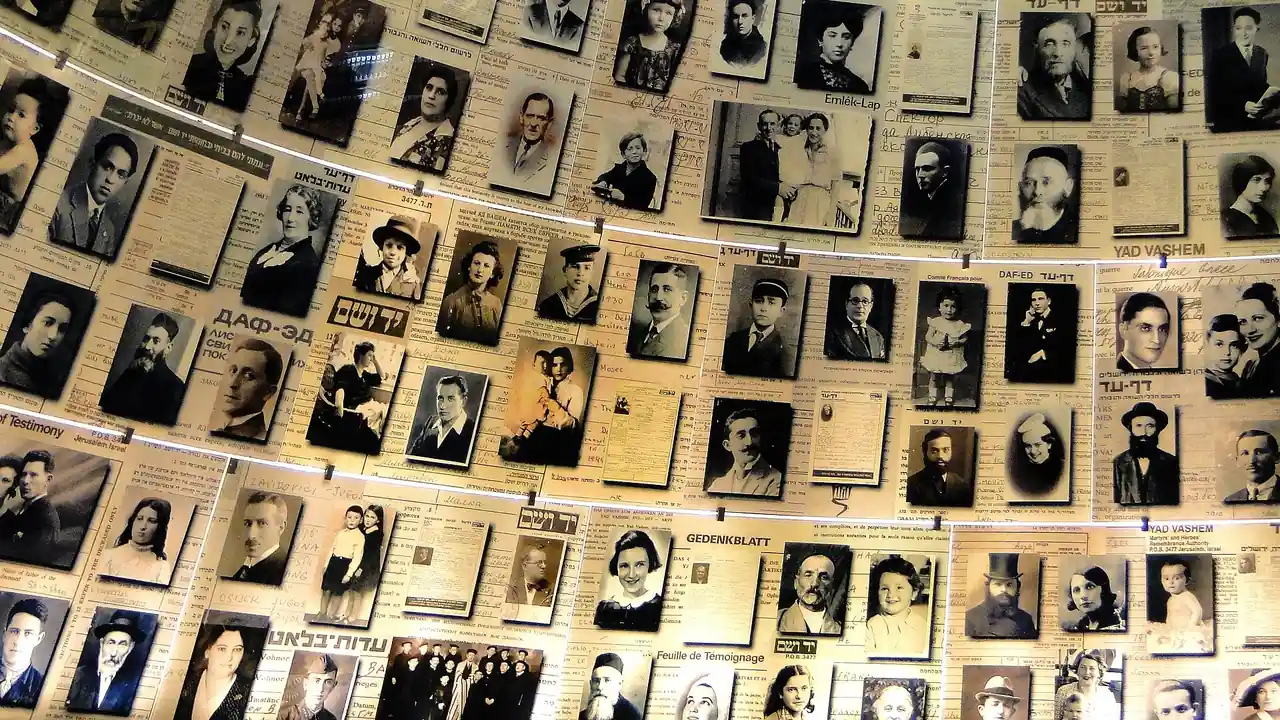
A late-night experimentation with artificial intelligence tools led an Israeli educator to uncover over 1,000 missing portrait photographs and unknown family history records linked to the Holocaust. Binyamin Ehrenberg, a teacher and father from the ultra-Orthodox community, used an AI agent to explore his family ancestry, resulting in a discovery that has since drawn immense public interest and sparked new technological approaches at Yad Vashem.
Uncovering Unknown Family History
During a late-night session exploring the capabilities of an advanced AI agent, Ehrenberg fed genealogical details from his own family and his wife's family into the system. By morning, the tool had generated a comprehensive family tree alongside a memorial record referencing his grandmother's previous marriage. Initially suspecting a system error, Ehrenberg asked the agent for its source material. The AI produced a 14-page testimony given by his grandmother in 1969 to a London museum, in which she mentioned a three-year-old daughter from a prior marriage who perished during the Holocaust.
Realizing the potential of automated archiving, Ehrenberg directed the AI to cross-reference archival records and uncatalogued images. The agent scanned records from the National Archive in Prague and initially identified dozens of matches linked to Yad Vashem databases. Further deep-scan testing yielded 1,056 new photographs and matching names that had not yet been catalogued by Holocaust researchers. Ehrenberg shared his findings with Yad Vashem and published his experience on social media, prompting an influx of inquiries from descendants of survivors seeking to trace their own lineages.
Institutional Integration at Yad Vashem
Yuval Zana, head of the Innovation, Information Systems, and Technology Division at Yad Vashem, noted that the institution has integrated artificial intelligence over the past two years to handle massive volumes of archival material. With hundreds of millions of documents, photographs, artifacts, and tens of thousands of testimonies collected over eight decades, manual processing has been a bottleneck. AI tools are now deployed to transcribe, translate, and summarize archival files, helping researchers identify additional names of victims, survivors, and Righteous Among the Nations.
"We see ourselves as the ultimate authority when it comes to Holocaust remembrance and research, and therefore historical accuracy is paramount, even if it affects our working pace," Zana explained.
While the technology has accelerated discovery rates—with current identification processes yielding significantly more prospective names than in previous years—Yad Vashem maintains a strict policy of manual verification. Every piece of data extracted by AI agents must be reviewed and authenticated by human researchers and experts to ensure absolute historical precision.
Expanding Technological Capabilities
Yad Vashem is actively developing several other artificial intelligence initiatives to enhance visitor experience and internal archiving. A specialized team is working on tailoring museum tours to individual visitors based on their personal interests and age groups. Other ongoing projects include facial recognition tools to generate comprehensive profiles for individuals appearing across multiple photo collections, as well as natural language search capabilities that allow archivists to retrieve images using descriptive text queries such as "child with a hat."
The institution is also conducting a pilot program to automate the cataloguing of foreign materials and is exploring the creation of a specialized Holocaust chatbot. Zana emphasized that the chatbot development requires strict guardrails to ensure it relies exclusively on verified historical sources. Both Ehrenberg and museum officials remain optimistic that emerging technologies will continue to assist the Jewish people in uncovering the fates of missing victims while preserving historical truth through human oversight.