114 orphans following murder: "A child who saw his father murdered is more likely to join crime"
Since the beginning of 2026, 52 parents of minors have been murdered, leaving them orphaned of a father or mother. "I am holding on only for the sake of the children," says P., a mother of four whose husband was murdered while trying to break up a fight. 9-year-old R. asks to leave the room while her grandmother talks about the murder of her mother by her husband: "He was constantly hitting her and the children."
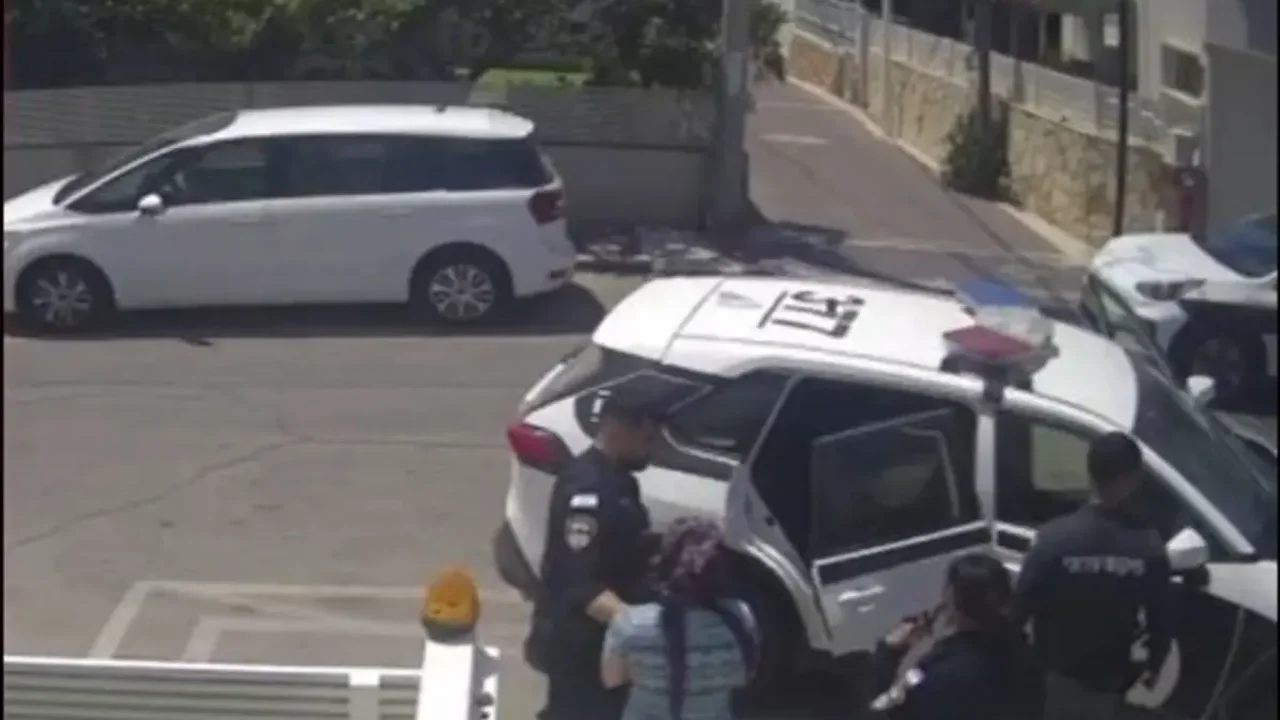
10-year-old S. asks to go play outside while her mother talks about her father's murder. It is hard for her to hear again about the day everything changed. She was a little girl when her father, a resident of Jisr az-Zarqa, left his home and noticed young men fighting. When he tried to separate them, one of them, a minor, stabbed him to death. It was a casual, senseless, and futile murder that left almost no mark on the public consciousness: in that same month, five other people were murdered in Arab society. But for S., her father's death is her whole world. Her mother, P., was shortly after the birth of their fourth son at the time. The father's death left the family without its main source of income and without family support. "I am holding on only for the sake of the children," says P. Her sentences are short and measured. She holds herself together so as not to break down when she talks about the fears the children still face today. "They prefer to stay at home," she says. They are afraid to go outside, perhaps a similar fate awaits them as their father.
Sitting next to S. is Arifa. Her family is also a victim of the violence raging in Arab society: about two years ago, her daughter, Sumaya, was murdered by her husband and the father of her children. When Arifa begins to talk about that black day, her granddaughter, 9-year-old R., also asks to leave the room. "She doesn't like me talking about it," says Arifa. One can understand why. R. was a first-grade student when the violent murder occurred. Even before that, she herself was a victim of the severe violence that prevailed in the home — violence that led Sumaya to complain to the police about her husband several times. On the day of the murder, the father told R. and her siblings that their mother had gone to work — even though the children saw that her car keys remained at home. Later, he tried to claim that the mother had left the house. "I received a message on my phone: 'Mom, I went to Sharm with a friend,'" recalls Arifa, "Out of fear, I threw the phone away. I knew it wasn't true — she wouldn't have left the children and gone, there's no such thing." Arifa suspected from the first moment that something bad had happened. "He was constantly hitting her, the children," she says. Security cameras outside a nearby shop revealed the truth: R. was brutally murdered early in the morning, and her husband hid her body in the trunk of the car. Afterwards, he drove the children, in that same vehicle, to his parents. From there, he drove to a pit prepared in advance and buried Sumaya's body. "He brought us a disaster, a disaster," says Arifa, "It's a miracle that I'm standing on my feet." Since then, the four children have been living with Arifa. She did not imagine that at this stage of her life — when she is also caring for a husband in a nursing condition — she would return to raising young children. The trauma the children went through affects every aspect of their lives: in their studies, in nightmares. Arifa, who received foster family status for her grandchildren, does not give up: she insists on treatments, drives them to doctors and everywhere she can get answers for the children.
Without income or support, the wave of crime and violence in Arab society, and the ease of the hand on the trigger and the knife, have long since permeated the public consciousness. The Israeli media counts the murdered, demands answers from the police and the government. But it seems that the true meaning behind the lengthening lists of the murdered has not yet been fully internalized: the circles of harm are much wider than the murdered themselves. They also include those wounded by gunfire — often bystanders, or those who were drawn against their will into the circles of revenge, even though they are normative citizens — eyewitnesses, and the relatives of the victims: parents, siblings, widows, and orphans. Very many orphans. 2026 is not yet over, and in Arab society, they are counting more than 100 children and teenagers who have been left without a parent following a murder. According to tracking conducted by the "Hamaniyot" (Sunflowers) association, which accompanies orphans from all parts of Israeli society, about 130 of the recent murder cases since the beginning of the calendar year have left 114 orphans under the age of 18 — nearly half of them toddlers and very young children, up to age 6. Often — as in the case of P. and her daughter S. — they are left without the main source of income, and without family support. The great fear, they say at "Hamaniyot," is that these children will join the circle of crime and violence in the not-too-distant future. "A child who saw how his father was murdered, whose mother is forced to live on a survivor's pension alone, who has no other male role model at home — his chances of joining the circle of crime increase," says Hadar Kas, CEO of "Hamaniyot."
The association operates ten centers in Arab society, where activities are intended for orphans and the remaining parent. These are not personal therapeutic meetings, but groups where children meet for joint activity — arts and crafts, cooking, and sports — through which, with the help of professional guidance, the children gradually open up and manage to talk a little more about the loss. "The demand is huge," says Kas. "At school, they don't always understand, they are not like me," says S., while in the group, all the children have lost a parent — and there is a common language. R. says she didn't want to come to the meetings at first, "I had to convince her," says Arifa. And today, she is not willing to miss a meeting. Among other things, the children talk at the meetings about their dreams: S. wants to be a doctor. R. dreams of being a lawyer, "so they know I'm strong," she says. One can only guess what the connection is between the professional dream and the trauma they experienced in their early childhood. When R.'s little brother was asked at the group meeting what his dream was, he answered explicitly: "My dream is mom, I dream about her all the time. I want to see her," says Hadra Jarban, director of the center in Jisr az-Zarqa. Jarban functions at the center as a professional supporting the victims' families, but almost incidentally, it turns out that she herself is also a victim of the raging violence: about four years ago, a criminal who shot in the street indiscriminately hit her son while he was playing in the yard. The son was wounded in his leg, and his soul has also remained wounded ever since.
The responses for murder orphans and other children who have fallen victim to the widening circles of violence raging in Arab society are very partial, far from enough. The activity of "Hamaniyot" relies on philanthropic donation funds, and in any case, the responses it provides are not a substitute for individual psychological treatment. The Ministry of Welfare operates ten support centers for families bereaved by sudden death, from car accidents to murder, two of which operate in Arab society. The Ministry of Welfare stated in response to an inquiry by ynet and "Yedioth Ahronoth" that in the past year, about 7,500 patients were treated in these centers, but they could not say how many of them came from Arab society. P. remembers that her family received psychological help at the beginning of the way, but it was short-term help: today, about four years after the murder, she is left alone in the struggle: with the anxieties, with the difficulties in studies, with economic survival. "The systems do not look reality in the eye, and therefore it is not urgent for them to find solutions," says Rawiya Handaklu, CEO of Ilaf — the center for promoting security in Arab society. The responses for murder orphans are similar to those intended for any child who has experienced loss, but the multiplicity of cases, alongside the fact that there is a structural shortage of mental health professionals in Arab society, requires, in her opinion, an extensive dedicated program to deal with the issue. "We are in a major event that requires a systemic change," she says, "The loss of a parent in these circumstances is twice as hard — because often the family doesn't even know who murdered the father, doesn't know if the rest of the family members are still threatened. Often women are in deep unemployment and the burden of providing falls on them. In such a situation, it is easy to 'hunt' these people back into the circles of crime."